Baltimore Freight Reloading: Fast Truck-to-Truck Transfers Near the Port
Baltimore Freight Reloading helps carriers, brokers, and shippers recover from transportation disruptions while keeping freight moving efficiently throughout the Mid-Atlantic region. Whether the challenge involves equipment failure, a missed appointment, shifted freight, or a last-minute routing change, freight reloading provides a practical solution that minimizes downtime and protects delivery schedules. In this article you’ll learn […]
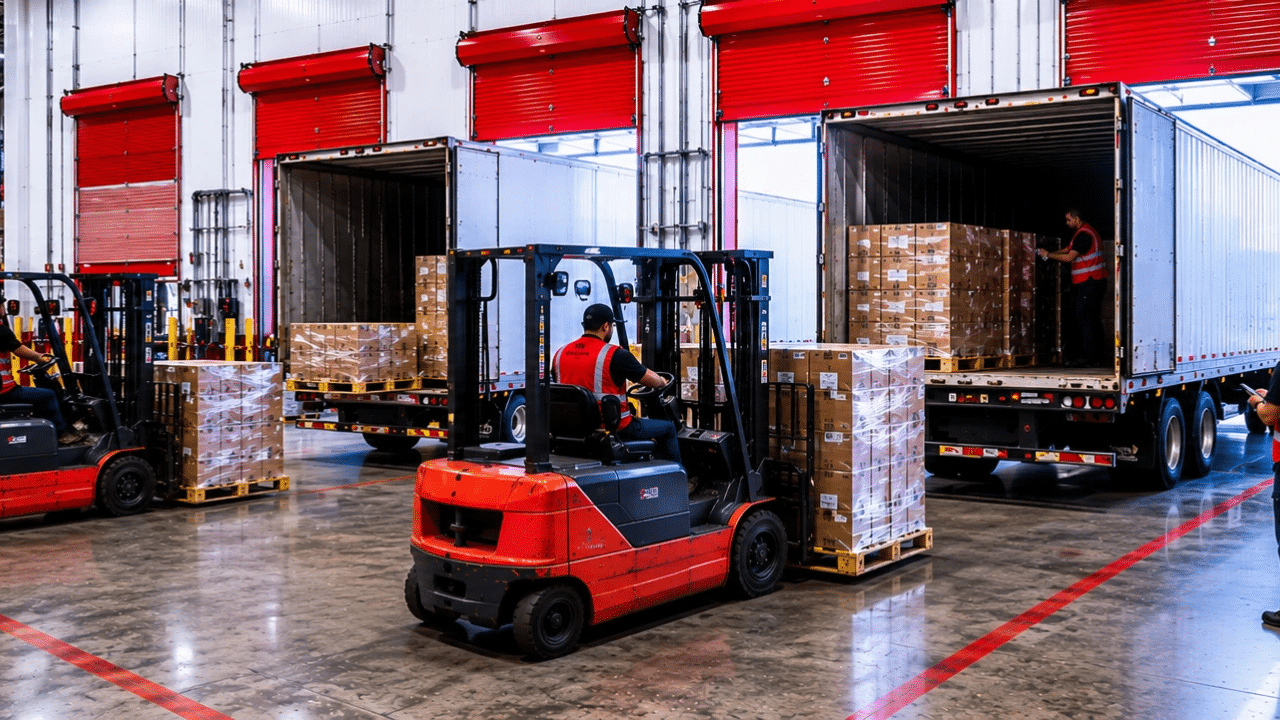
Baltimore Freight Reloading helps carriers, brokers, and shippers recover from transportation disruptions while keeping freight moving efficiently throughout the Mid-Atlantic region. Whether the challenge involves equipment failure, a missed appointment, shifted freight, or a last-minute routing change, freight reloading provides a practical solution that minimizes downtime and protects delivery schedules. In this article you’ll learn all about Baltimore Freight Reloading with fast truck-totruck transfers near the East Coast port.
Positioned near major East Coast transportation corridors, Baltimore serves as a strategic transfer point for freight moving between ports, distribution centers, warehouses, and final delivery destinations. Fast trailer-to-trailer transfers help transportation companies maintain operational flexibility while avoiding costly delays.
What Is Freight Reloading and How Does a Truck-to-Truck Transfer Work?
Before looking at when and why freight reloading is used, it helps to define the process itself, since both terms appear throughout this article without explanation.
Freight reloading is the process of transferring cargo from one truck or trailer to another, typically because the original vehicle can no longer complete the delivery as planned. A truck-to-truck transfer is the specific operation of physically moving freight, whether palletized goods, loose cargo, or full container loads, from one trailer directly into another, usually at a facility equipped with loading docks, forklifts, and staging space to handle the transfer efficiently.
This is different from cross-docking in one important respect. Cross-docking is typically a planned part of a distribution network, where freight is expected to move through a facility on a predictable schedule as part of normal operations. Freight reloading is more often a response to an unplanned disruption: a truck that breaks down mid-route, a driver who runs out of available hours under federal Hours of Service regulations, or freight that arrives at a facility only to find the scheduled outbound trailer is no longer available.
The physical process is straightforward in concept but requires the right conditions to execute quickly. The facility needs dock doors positioned so both the inbound and outbound trailers can be staged simultaneously, equipment (forklifts, pallet jacks, or in some cases overhead cranes for heavier freight) to move cargo between trailers, and staff available on short notice, since the entire value of a reload service is in its speed. A reload that takes as long as unloading into a warehouse and reloading days later defeats the purpose.
For freight moving through or near a major port like Baltimore, where container traffic, trucking capacity, and warehouse availability all interact, having a reload option available nearby can be the difference between a multi-day delay and a same-day recovery.
When Freight Reloading Becomes Necessary
Transportation plans can change quickly.
Common situations that require freight reloading include:
- Trailer breakdowns
- Reefer failures
- Carrier substitutions
- Missed warehouse appointments
- Route adjustments
- Shifted freight recovery
- Emergency transportation changes
Instead of leaving freight stranded, reloading services allow shipments to be transferred directly into replacement equipment and continue moving toward their destination.
Why Baltimore Is a Strong Freight Transfer Location: Reloading
Baltimore provides direct access to:
- Port of Baltimore cargo flows
- Interstate 95
- Interstate 70
- Interstate 695
- Washington, DC markets
- Philadelphia distribution corridors
- Finally, major East Coast transportation networks
This strategic location allows freight to be transferred efficiently between inbound and outbound transportation while minimizing additional mileage and delays with top Baltimore Freight Reloading.
Port of Baltimore: What Makes This Location Specifically Valuable
The article’s title centers on proximity to “the port,” so it is worth covering what the Port of Baltimore actually handles and why that matters for freight reloading specifically.
The Helen Delich Bentley Port of Baltimore is one of the principal deep-water ports on the US East Coast. It has consistently ranked among the busiest ports in the country for roll-on roll-off (Ro-Ro) cargo, meaning vehicles, machinery, and other wheeled cargo that drives on and off vessels rather than being loaded by crane. The Dundalk Marine Terminal handles much of this Ro-Ro traffic, while the Seagirt Marine Terminal is the port’s primary container facility, equipped with deep berths capable of handling the largest container vessels that call on the East Coast.
This mix of cargo types matters for freight reloading because it creates varied and high-volume inbound freight flows that need to move quickly to distribution centers, dealerships, and retail networks across the Mid-Atlantic and beyond. A disruption affecting any single shipment, a missed appointment at a distribution center, a trailer that develops a mechanical issue on the short haul from the port, can have a cascading effect if the freight cannot be quickly transferred to alternate equipment and get back on schedule.
It is also worth noting, for anyone researching freight operations near Baltimore in 2026, that the Port of Baltimore experienced a significant disruption following the collapse of the Francis Scott Key Bridge in March 2024, which temporarily closed the main shipping channel into the port. The channel was reopened to traffic later in 2024, and normal port operations resumed, though rebuilding of the bridge itself remains an ongoing, multi-year infrastructure project. For freight operations specifically, this history underscores why having flexible, fast-response options like truck-to-truck reloading near the port is valuable: disruptions to fixed infrastructure can affect trucking routes and appointment schedules in ways that ripple through to individual shipments, and having a local reload option provides a way to adapt quickly when broader disruptions occur.
How Truck-to-Truck Transfers Reduce Downtime
A truck-to-truck transfer is often the fastest way to recover from transportation disruptions.
Benefits include:
- Faster freight recovery
- Reduced detention costs
- Improved delivery performance
- Lower storage expenses
- Better shipment visibility
- Finally, increased transportation flexibility
For carriers operating under strict delivery schedules, minimizing downtime can significantly reduce operational costs.
The Cost of Detention and Why Fast Reloads Matter Financially
The benefits list in the previous section mentions “reduced detention costs,” and this is worth unpacking because detention is one of the largest and most variable costs in trucking, and it is directly affected by how quickly a disrupted shipment can be resolved.
Detention refers to the time a truck and driver spend waiting beyond the scheduled appointment window at a shipper or receiver’s facility, for which carriers typically charge a fee, often in the range of $50 to $100 per hour after a grace period (commonly one to two hours). For a driver operating under Hours of Service regulations, which limit the total number of hours a driver can be on duty and driving within a given period, time spent in detention is not just a direct cost. It can also consume hours the driver needs to complete the delivery, potentially turning a same-day delivery into a multi-day delay if the driver runs out of available hours while waiting.
When a truck-to-truck reload resolves a disruption quickly, typically within hours rather than days, it limits detention costs to a single, bounded event rather than allowing a problem to compound. A driver whose truck breaks down can have their freight transferred to a replacement trailer and continue toward the delivery appointment, rather than the freight sitting until the original truck is repaired or a new truck and driver can be dispatched, which can take a full day or more depending on parts availability and driver scheduling.
For shippers and brokers managing multiple loads simultaneously, the ability to resolve a single disrupted shipment quickly through a local reload, rather than having that disruption affect downstream appointments, deliveries, and driver schedules across a broader network, is where the financial value of fast reloading becomes most apparent.
Supporting Port and Distribution: Baltimore Freight Reloading
Many shipments arriving through the Port of Baltimore require rapid redistribution throughout the Mid-Atlantic region.
Freight reloading helps support:
- Import distribution
- Retail replenishment
- Manufacturing supply chains
- E-commerce fulfillment
- Finally, regional transportation networks
By transferring freight quickly and efficiently, businesses can improve delivery speed while reducing handling requirements.
Additional Services That Support Freight Reloading
Many freight transfer projects also require:
- Cross Docking
- Pallet Restacking
- Freight Rework
- Warehouse Rework
- Short-Term Storage
- Freight Consolidation
- Finally, freight Deconsolidation
Combining services within a single facility simplifies logistics planning and helps maintain freight flow.
When to Choose Truck-to-Truck Reloading vs Other Recovery Options
Not every transportation disruption calls for the same response. Understanding the options and when each makes sense helps carriers, brokers, and shippers make faster decisions when something goes wrong.
- Truck-to-truck reload is the right choice when the freight itself is fine but the equipment or driver situation has changed: a mechanical breakdown, a driver out of hours, a reefer unit failure on temperature-sensitive freight, or a carrier substitution where a different trucking company needs to take over the load. The freight moves directly from one trailer to another with minimal handling and minimal time loss.
- Short-term storage is the right choice when the freight needs to wait, even briefly, for the next leg of transportation to become available, such as when a replacement trailer is being dispatched from elsewhere and will not arrive for several hours. Rather than leaving a loaded trailer occupying a dock door, the freight can be unloaded into short-term storage and the original trailer released, then reloaded onto the replacement when it arrives.
- Freight consolidation or deconsolidation is the right choice when the disruption involves not just one shipment but multiple shipments that need to be combined or split differently than originally planned, for example, when two partial loads headed to nearby destinations can be combined onto a single outbound trailer to reduce the number of trucks needed.
- Pallet restacking or freight rework is the right choice when the freight itself has shifted, been damaged in transit, or was loaded in a way that doesn’t fit the replacement equipment, requiring the freight to be reorganized before it can continue.
In practice, a single disruption often involves more than one of these services. A trailer breakdown might require short-term storage while a replacement is dispatched, followed by a truck-to-truck reload once it arrives, with pallet restacking if the freight shifted during the original transport. Facilities that offer all of these services under one roof, rather than requiring a business to coordinate between multiple providers, reduce both the complexity and the time required to resolve a disruption.
How Freitty Supports Freight Transfer Operations
Freitty provides flexible freight handling solutions designed to support modern transportation networks.
The Baltimore facility supports:
- Freight Reloading
- Truck-to-Truck Transfers
- Cross Docking
- Freight Consolidation
- Pallet Restacking
- Freight Rework
- Short-Term Storage
Whether responding to an emergency transportation issue or supporting a planned freight transfer project, Freitty helps businesses reduce delays and maintain delivery performance.
Frequently Asked Questions About Freight Reloading Near Baltimore
Cross-docking is typically a planned, recurring part of a distribution network, where freight is expected to move through a facility on a predictable schedule with minimal storage time as part of normal operations. Freight reloading is more often a response to an unplanned disruption, such as a mechanical breakdown, a driver running out of available hours, or a missed appointment, where freight needs to be transferred to different equipment to keep a specific shipment moving. Both processes involve moving freight between trailers, but cross-docking is built into routine operations while reloading is typically reactive.
The time required depends on the freight type and volume, but a primary advantage of truck-to-truck reloading is speed relative to alternatives like full warehouse unloading and re-palletizing. For palletized freight using forklifts, a full trailer can often be transferred in under an hour at a facility equipped for reloading. For loose or non-palletized freight, or for freight requiring inspection or rework during the transfer, the process takes longer. The key factor is having dock space, equipment, and staff available without advance scheduling delays, which is why proximity to major freight corridors and ports matters for response time.
Baltimore’s position provides direct access to Interstate 95, the primary north-south corridor on the East Coast, as well as Interstate 70 and Interstate 695, connecting to Washington DC and Philadelphia markets within a short drive. Combined with the Port of Baltimore’s container and Ro-Ro cargo volumes, this creates significant freight movement through the region that benefits from having reload, storage, and consolidation services available locally rather than requiring freight to be rerouted to facilities further away when a disruption occurs.
The most common causes are equipment-related: trailer breakdowns, reefer unit failures on temperature-controlled freight, and tire or mechanical issues that take a trailer out of service. Driver-related issues, particularly running out of Hours of Service before reaching a destination, are another common cause. Missed warehouse appointments, where a receiving facility cannot accept a delivery at the scheduled time and the truck needs to be released for its next assignment, also frequently require freight to be transferred to alternate equipment or moved to short-term storage.
When handled quickly, freight reloading is specifically designed to minimize the impact on delivery times compared to the alternative of leaving freight stranded until the original issue is resolved. A reload that takes one to two hours at a well-equipped facility often allows a shipment to still meet its original delivery window or miss it by only a small margin, compared to a delay of a full day or more if the freight sits until a replacement truck and driver can be dispatched from a distant location.
Keeping Freight Moving When Plans Change
Transportation plans change, and the businesses that handle disruptions well are typically those with fast, local options for resolving them rather than those that simply absorb the delay. Baltimore’s position on major East Coast corridors, combined with its port traffic, makes local freight reloading capacity particularly valuable for carriers, brokers, and shippers operating in the Mid-Atlantic region.
Whether the issue is a mechanical breakdown, a driver running out of hours, a missed appointment, or a need to consolidate freight differently than originally planned, having access to truck-to-truck reloading, short-term storage, and related services at a single facility reduces both the cost and the complexity of getting a disrupted shipment back on track.
For businesses managing freight movement more broadly, understanding the role of freight forwarders in coordinating these kinds of logistics decisions provides useful context for when to handle disruptions directly versus when to rely on a freight forwarder’s network of relationships and contingency options.
