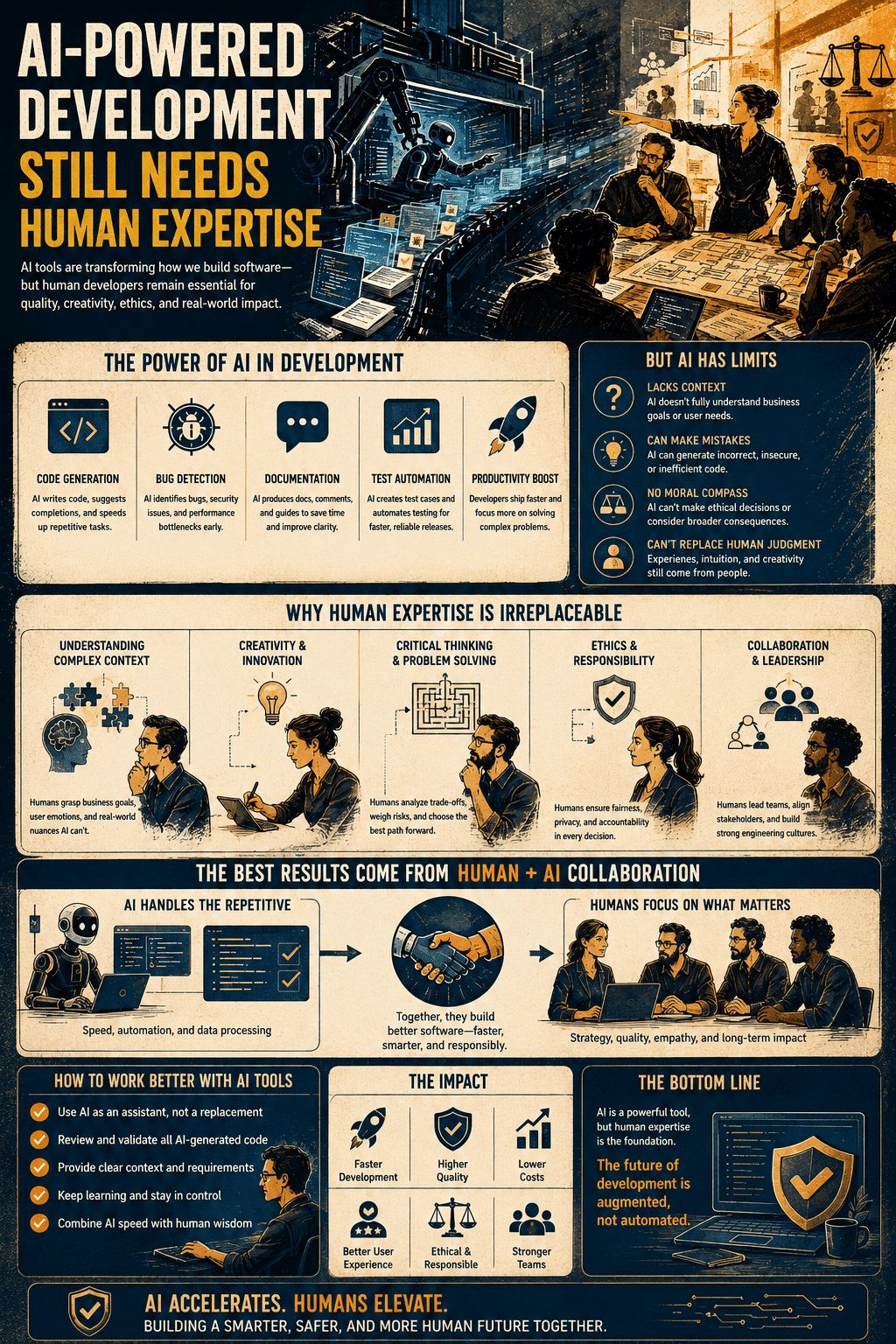
AI-powered Development Still Needs Human Expertise
AI speeds up coding, but human expertise still guides product strategy, quality, risk and real software outcomes.
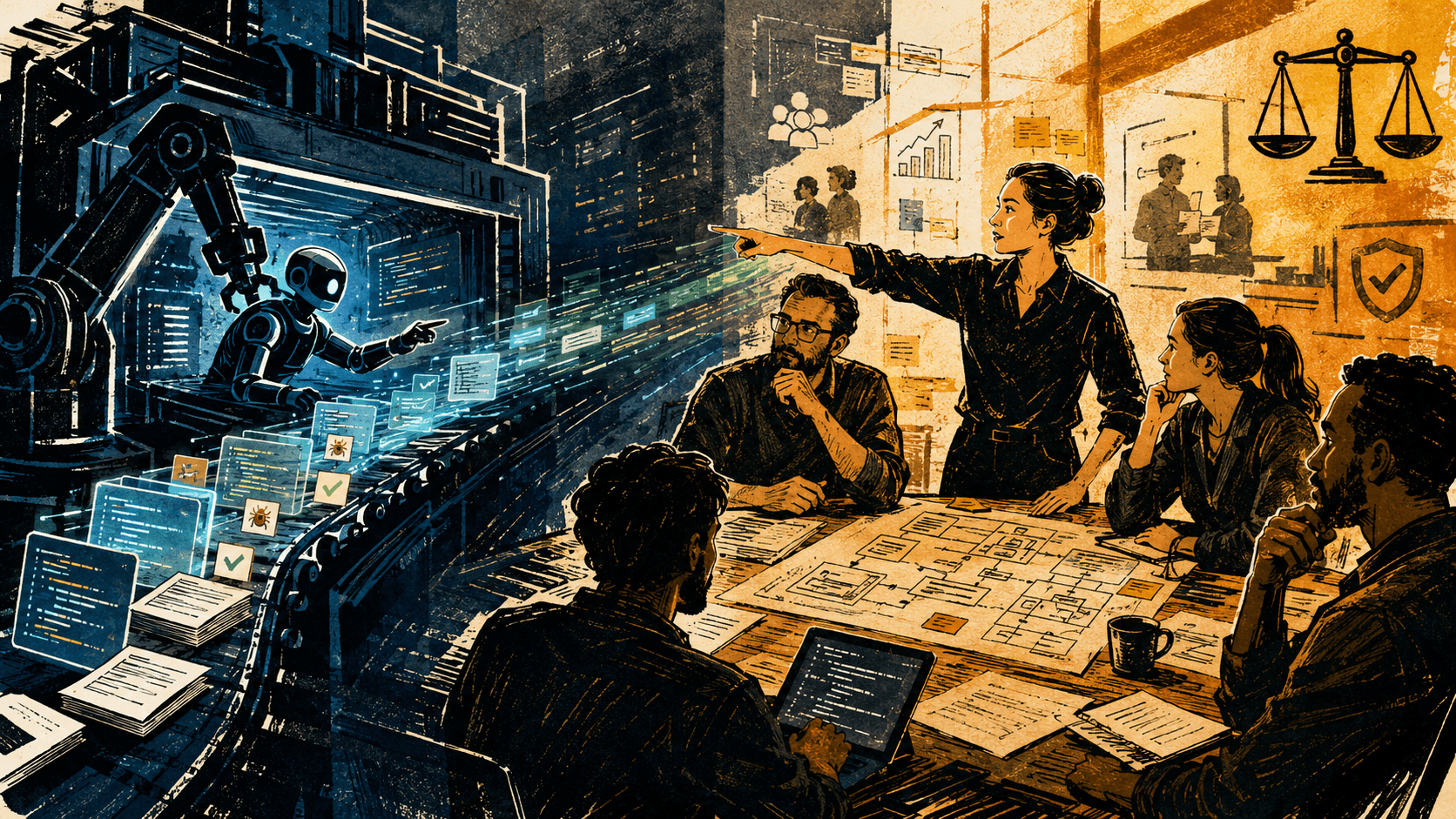
AI is changing the way software is built, from code generation to automated testing, and teams are moving faster because of it. But speed isn’t the same as judgment. This guide covers what AI-powered development actually does well, where it demonstrably fails, including a documented security risk most teams haven’t heard of yet, and why human expertise in software development isn’t going away anytime soon.
1. What AI does well in software development
AI has become particularly effective at handling repetitive and time-consuming tasks. Modern tools such as ChatGPT, GitHub Copilot, and Cursor can help developers complete work in minutes that once took hours.
1.1. Code generation and completion
AI can:
- Generate boilerplate code.
- Create APIs and database queries.
- Write unit tests.
- Suggest code improvements.
- Translate code between programming languages.
For experienced developers, these capabilities can significantly reduce development time and allow them to focus on more complex challenges.
1.2 Testing and debugging
AI is also proving useful in quality assurance. It can identify common bugs, suggest fixes, generate test cases, and support static code analysis. In many cases, AI can detect issues earlier in the development cycle, helping teams reduce rework and improve efficiency.
1.3. Documentation and research
Another area where AI performs well is information processing. Teams increasingly use AI to summarize requirements, generate technical documentation, and conduct preliminary market or competitor research. However, being able to generate outputs quickly does not necessarily mean understanding the context behind them.
2. Where AI still falls short
Software development is about much more than writing code. Successful products require business understanding, strategic decisions, and collaboration across multiple stakeholders.
2.1. Understanding business context
AI can build a feature based on a prompt, but it cannot fully understand why that feature matters. For example, AI cannot reliably determine on its own:
- Whether speed-to-market is more important than scalability.
- Which features should be prioritized within a limited budget.
- How to balance user expectations with technical constraints.
- Whether a client should avoid building a feature altogether.
These decisions require human judgment, experience, and an understanding of the broader business landscape. Warehouse software is a good example. Agencies building for Magento stores often have to decide whether a custom barcode scanning module is worth maintaining or whether an existing extension does the job, a trade-off covered in this build or buy guide for Magento barcode scanning.
2.2. Product thinking and communication
Building software is ultimately a collaborative process. Product managers, business analysts, designers, developers, and clients all contribute to the outcome. While AI can support these roles, it cannot replace discussions around trade-offs, risk management, or product strategy.
A software product succeeds not only because it works technically, but because it solves the right problem.
What “Still Needs Human Expertise” Actually Looks Like in Practice
The claims above are true, but generic caution is easy to dismiss without a concrete failure mode attached. Here’s one that’s specific, documented, and tied directly to AI’s core weakness: it doesn’t know what it doesn’t know.
When large language models generate code, they sometimes invent package names that sound plausible but don’t exist, a phenomenon researchers call package hallucination. A USENIX Security 2025 study found this happens consistently enough that attackers now register these hallucinated names on public registries like npm and PyPI, then fill them with malicious code. A developer who trusts the AI’s suggestion and installs the “obvious” package name gets a working exploit instead of a working dependency, this attack now has a name: slopsquatting.
This is exactly the kind of risk human review catches and AI alone doesn’t. A senior developer who’s used a package ecosystem for years has an instinct for “wait, that name doesn’t sound right,” the same judgment this article’s earlier section describes in business terms applies just as directly to security.
Where This Discipline Already Exists in Software Teams
None of this is a new problem for good engineering teams, it’s the same discipline that’s always mattered, just with a new failure mode to watch for. The same rigor that prevents technical debt from quietly accumulating applies directly to AI-generated code: review it like you’d review any other unfamiliar contribution, don’t assume competence just because it compiled.
That same principle extends beyond code review too. Turning real expertise into content that actually holds up requires the same thing AI-assisted development does: a human who actually understands the subject matter checking the output before it goes out the door.
Who Trains the Next Generation of Experts?
There’s a second, slower-moving version of the same problem this article has been describing. Junior developers historically built judgment by doing the tedious work first, writing boilerplate, debugging obvious errors, reading unfamiliar codebases line by line, before graduating to harder decisions. AI now does much of that work directly.
That’s not an argument against using AI. It’s a reason to be deliberate about how junior team members are trained going forward, since the senior developers this article says are essential don’t appear from nowhere. Teams that let AI handle every routine task without ever having junior staff work through the reasoning themselves are quietly skipping the step that built their own senior engineers’ judgment in the first place.
The practical fix isn’t complicated: junior developers should still be asked to explain why an AI-generated solution works, not just confirm that it does. That single habit preserves the exact skill this article argues AI can’t replace.
3. AI works best as an accelerator, not a replacement
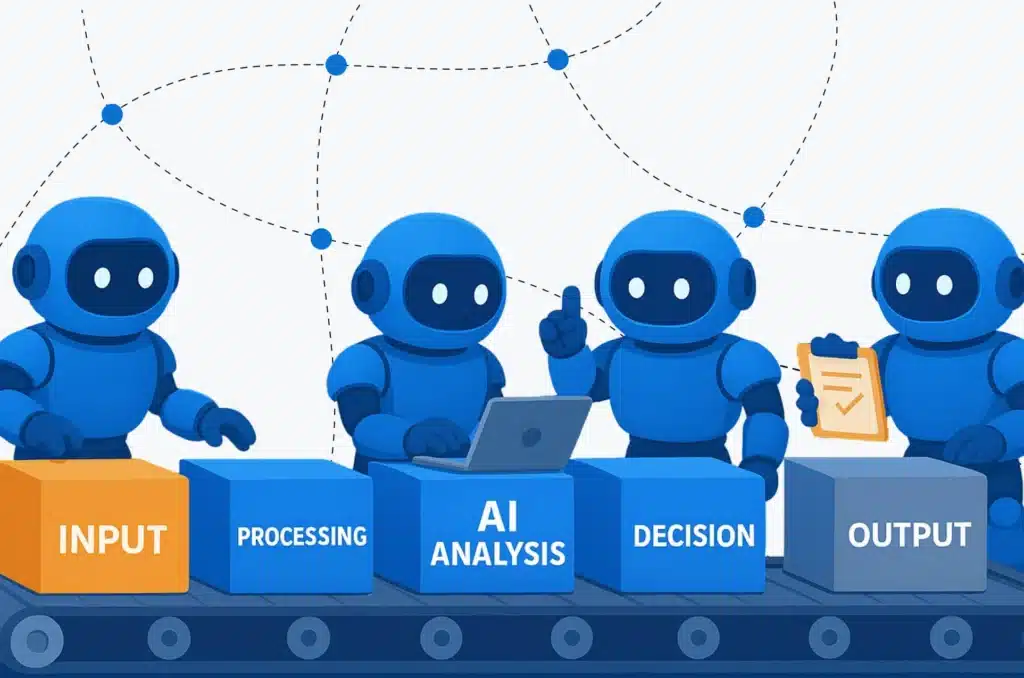
Rather than replacing software professionals, AI is changing how they work. Developers who use AI effectively can often improve their productivity compared with traditional workflows. The same is true for QA engineers, designers, business analysts, and project managers.
This shift is already reshaping expectations across the industry. Companies are not necessarily looking for fewer software professionals. Instead, they are looking for teams that can combine technical expertise with AI-assisted workflows.
The future of software development is unlikely to be AI versus humans. It is more likely to be AI working alongside humans.
4. How AI Adoption Looks Across a Real Software Team
Software studios that have integrated AI across multiple stages of their development lifecycle offer a useful reference point for what this looks like in practice.
4.1. AI adoption across teams
PowerGate Software reports using AI to support a range of activities, including:
- AI-assisted coding, debugging, and optimization for developers.
- Design automation and user feedback analysis for designers.
- Requirement gathering and competitive research for business analysts.
- Test case generation and bug detection for QA teams.
- Project planning, risk identification, and performance monitoring for project managers.
The company states that AI is used to enhance productivity rather than replace human expertise.
4.2. The Typical Impact
Based on broader industry data, AI-assisted workflows of this kind can contribute to:
- Faster development cycles.
- Reduced time spent on debugging and testing.
- Improved consistency in coding standards.
- Greater team productivity.
- More time for strategic and creative work.
While results will vary depending on project complexity and team maturity, the direction is clear: AI is becoming an important part of modern software development.
PowerGate Software, an AI-powered software product studio, is one example of a team structured this way, applying AI across developer, design, business analyst, QA, and project management functions rather than treating it as a single point tool. Worth using as a reference point when evaluating how a studio has actually integrated AI, not as the only way to do it.
5. What the industry is learning from AI
One of the biggest lessons from recent years is that AI excels at execution but remains limited in judgment. AI can generate code, but it cannot take responsibility for a product’s success. It can provide recommendations, but it cannot replace accountability. Most importantly, it cannot replicate the combination of experience, communication, and decision-making that software teams bring to every project.
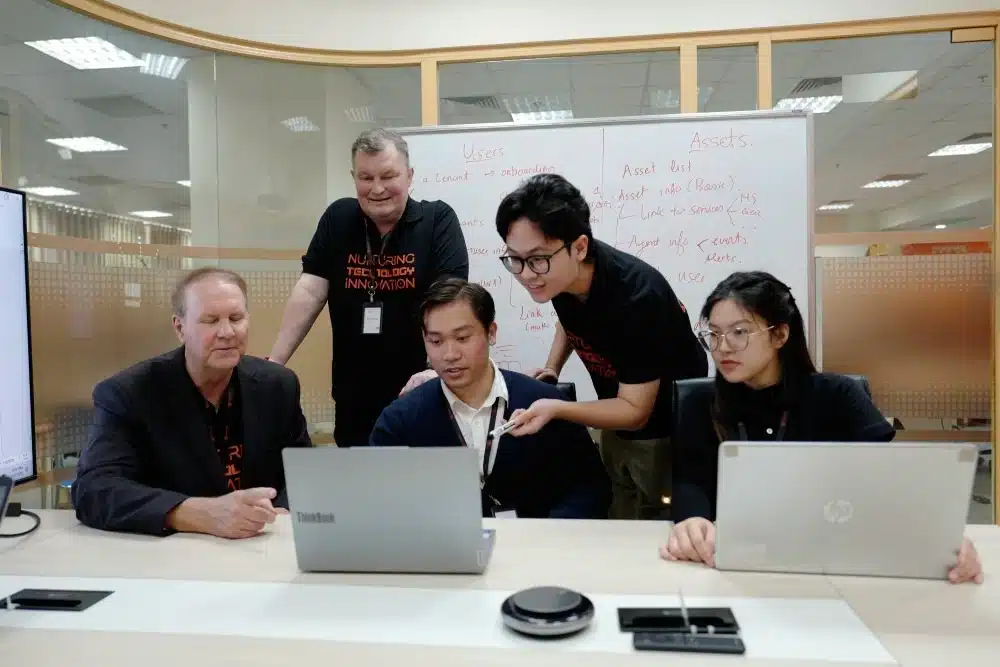
Organizations that benefit most from AI are not those attempting to remove people from the process. They are the ones finding better ways for people and technology to work together.
AI-powered development is transforming the software industry, but it has not eliminated the need for human expertise. AI can accelerate delivery, improve efficiency, and automate repetitive tasks, yet successful software products still depend on people who understand business goals, users, and difficult trade-offs. As companies continue to adopt AI-powered development practices, human expertise remains one of the most valuable assets in building software that truly delivers results
Frequently Asked Questions About AI-Powered Development and Human Expertise
No. AI is highly effective at repetitive, well-defined tasks like boilerplate code, test generation, and debugging, but it cannot reliably make business tradeoffs, understand why a feature matters, or take responsibility for a product’s outcome.
It’s when an AI coding tool invents a plausible-sounding package name that doesn’t actually exist. Attackers monitor for these hallucinated names, register them on public package registries, and fill them with malicious code, so a developer who trusts the suggestion can unknowingly install an exploit.
Independent testing has found vulnerability rates in AI-generated code ranging from roughly 40% to 45% across large samples, with some languages performing notably worse than others. This is why human security review remains essential, not optional.
Boilerplate code generation, API and database query creation, unit test writing, bug detection, and documentation. These are well-defined, repetitive tasks where AI consistently saves real time.
Most evidence points to a shift in role rather than a reduction in need. Teams increasingly look for developers who can combine technical skill with effective AI-assisted workflows, not fewer people overall.
Treat AI output the same way you’d treat a contribution from an unfamiliar developer: review it, test it, and verify any suggested dependencies actually exist and come from a legitimate source before installing them.
Infographic