Asset Tokenization: The Trend That Is Changing Investment in Spain
Something quietly significant has been happening across Spanish investment circles over the past two years, and most people outside finance have barely noticed it. A growing number of properties, vineyards, art collections, and even private company shares are being split into digital tokens that ordinary investors can buy for a few hundred euros. What used […]
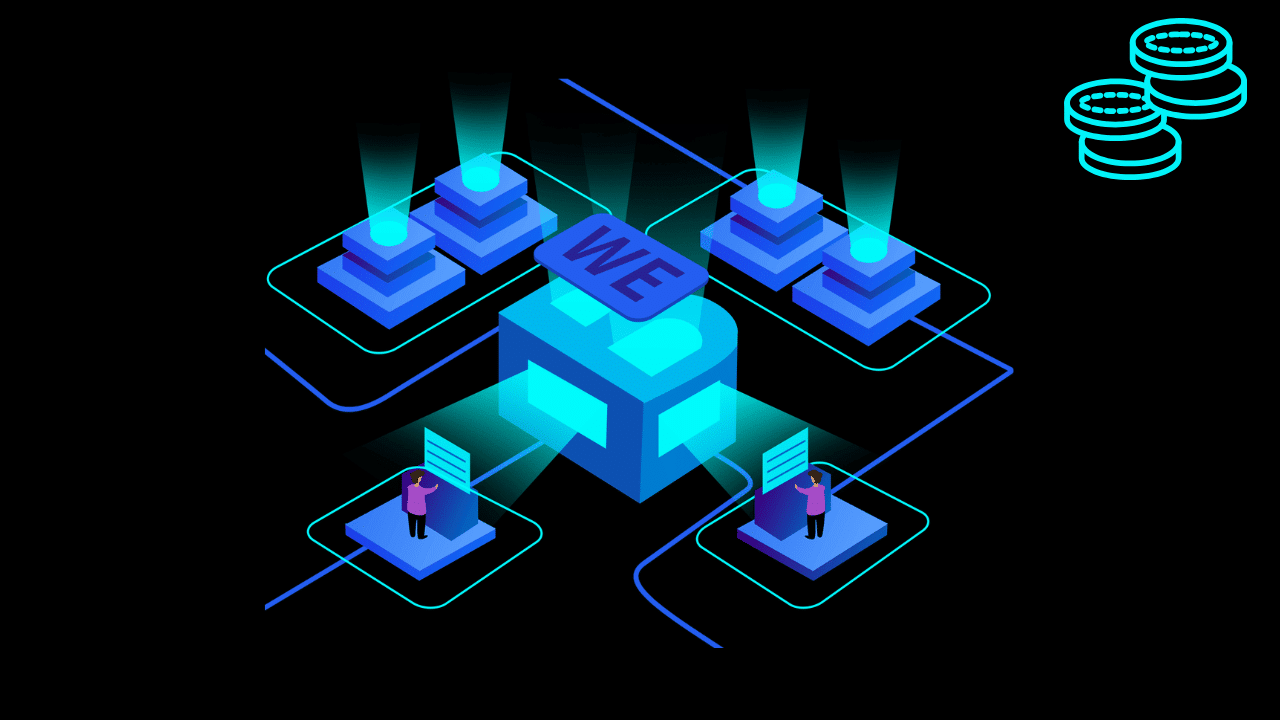
Something quietly significant has been happening across Spanish investment circles over the past two years, and most people outside finance have barely noticed it. A growing number of properties, vineyards, art collections, and even private company shares are being split into digital tokens that ordinary investors can buy for a few hundred euros. What used to require a notary, a six-figure check, and months of paperwork now happens through a smartphone in minutes. This is asset tokenization, and it is reshaping who gets to invest in Spain, not just how. Explore the trend that is changing investment
For decades, the best-performing assets in Spain, prime Madrid real estate, established vineyards in Rioja, shares in promising private companies, were locked behind high minimum investments that excluded almost everyone outside the wealthy and the institutional. Tokenization breaks that lock. By representing ownership rights as digital tokens on a blockchain, it allows a single property or fund to be divided into thousands of tradable fractions, each one purchasable by everyday savers who previously had no realistic path into these markets. This guide explains what is actually happening, why Spain has become a genuine hotspot for this trend, and what it means for anyone thinking about where to put their money next.
What Asset Tokenization Actually Means
At its core, tokenization is the process of converting ownership rights to a real or financial asset into digital tokens recorded on a blockchain. Think of it as splitting a single, expensive asset into many small, tradable pieces, each one a verifiable, transferable claim on a slice of the underlying value. A ten-million-euro office building in Barcelona, instead of requiring a single buyer with ten million euros, can be tokenized into ten thousand tokens worth a thousand euros each, opening that investment to a completely different population of buyers.
The mechanics rely on the same underlying technology that powers cryptocurrencies, but the application is fundamentally different and considerably more grounded. While Bitcoin and similar coins represent value that exists natively on the blockchain, tokenized assets represent a legal claim on something that exists in the physical or traditional financial world: real estate, private equity, art, debt instruments, or revenue streams. The blockchain simply provides the ledger, the proof of ownership, and the infrastructure for instant, transparent trading. Understanding the broader blockchain market and where this technology is heading helps put tokenization in context as one of the most commercially mature applications of blockchain outside of cryptocurrency trading itself.
Why Spain Has Become a Tokenization Hotspot
Spain occupies a particularly interesting position in the European tokenization story, and the reasons are not accidental. The country has a deep, longstanding culture of real estate investment, a regulatory environment that has moved with relative speed to accommodate digital securities, and a fintech sector that has grown rapidly enough to attract serious capital and talent. Combine those three factors, and you get fertile ground for a financial innovation that depends on both demand and a workable legal framework.
The regulatory piece deserves particular attention because it is often the deciding factor in whether a market develops responsibly or chaotically. Spain’s securities regulator has worked within the European Union’s evolving digital asset framework to create pathways for tokenized securities that comply with existing investor protection rules rather than operating in a gray area. This matters enormously for legitimacy, because tokenization platforms that sidestep securities law tend to attract speculative capital and eventually regulatory crackdowns, while those built on compliant foundations attract patient, long-term investors. The growth of tokenización de activos en España has been driven substantially by this regulatory clarity, which gives both issuers and investors the confidence to participate at scale rather than treating the space as a curiosity.
There is also a cultural dimension worth naming directly. Spanish households have historically held a larger share of their wealth in real estate compared to many of their European neighbors, and tokenization offers a way to keep that real estate exposure while gaining the liquidity and diversification that direct property ownership has always lacked. A Spanish investor who previously had to choose between one illiquid apartment or none at all can now hold fractional stakes across several properties in different cities, spreading risk in a way that was simply not practical before.
How Asset Tokenization Compares to Traditional Investment Models
To understand why tokenization is attracting serious capital rather than just curiosity, it helps to see how it stacks up directly against the traditional ways Spanish investors have historically accessed similar asset classes. The table below breaks down the core differences across the dimensions that matter most to an everyday investor.
| Factor | Traditional Real Estate / Private Equity | Tokenized Assets |
|---|---|---|
| Minimum Investment | Often €50,000 or more | As low as €100 to €500 |
| Liquidity | Low, sale can take months | High, traded on secondary markets |
| Transaction Costs | High notary, legal, agency fees | Lower, largely automated |
| Diversification | Difficult with limited capital | Easy across multiple assets |
| Transparency | Limited, relies on intermediaries | High, blockchain-verified ownership |
| Settlement Time | Weeks to months | Minutes to days |
| Geographic Access | Often requires local presence | Accessible remotely |
| Regulatory Maturity | Well established | Developing, improving rapidly |
That last row deserves honesty rather than glossing over. Tokenization’s regulatory framework, while improving quickly across Spain and the broader EU, is genuinely younger than the centuries-old rules governing traditional property transactions. That is not a reason to dismiss the opportunity, but it is a reason to choose platforms and issuers carefully, a point worth returning to before any real commitment of capital.
The Assets Being Tokenized Across Spain
The range of what is actually being tokenized in the Spanish market has expanded well beyond the early experiments most people picture when they hear the term. Real estate remains the clearest and most established use case, with both commercial properties and residential developments in cities like Madrid, Barcelona, and Valencia now available through tokenized offerings that let investors buy fractional stakes and receive proportional rental income for Spain asset tokenization as an investment trend.
Beyond property, Spain’s wine industry has become an unexpectedly active player in this space. Established vineyards, particularly in Rioja and Ribera del Duero, have tokenized portions of their production and aging inventory, giving investors exposure to an asset class that has historically appreciated steadily but remained almost entirely inaccessible to outside capital. Private equity stakes in growing Spanish companies, particularly in the technology and renewable energy sectors, represent another expanding category, allowing smaller investors to access growth-stage businesses that would otherwise require venture capital relationships most people simply do not have.
Art and collectibles round out the picture, though this segment remains smaller and more niche than real estate or private equity. The principle is consistent across every category: an asset that was previously illiquid, expensive to access, and reserved for wealthy or institutional buyers becomes divisible, tradable, and available to a dramatically wider pool of investors.
What Investors Need to Understand Before Participating
Enthusiasm for a genuinely useful innovation should never replace careful due diligence, and tokenization is no exception. The most important distinction any prospective investor needs to internalize is between platforms that operate within established securities regulation and those that do not. A properly structured tokenized offering in Spain typically involves a regulated entity, clear legal documentation establishing what the token actually represents, and custody arrangements that protect investor rights even if the platform itself encounters problems.
Here is what to verify before committing capital to any tokenized asset offering Spain asset tokenization as an investment trend:
- Regulatory status of the issuer. Confirm the platform or issuing entity operates under appropriate securities or crowdfunding licensing recognized by Spanish or EU authorities, not simply a blockchain wallet with a polished website.
- Underlying asset documentation. Real, verifiable legal title to the asset being tokenized should exist independently of the blockchain record, with clear documentation of what happens to that underlying asset if the platform fails.
- Liquidity claims versus reality. Secondary market trading is often advertised but not always genuinely active. Investigate actual trading volume rather than trusting marketing language about liquidity.
- Fee structure transparency. Tokenization platforms often charge issuance fees, management fees, and trading fees that can erode returns meaningfully if not understood upfront.
- Token holder rights. Clarify whether the token grants genuine ownership rights, voting rights, or merely an economic interest, since these carry very different legal protections.
This is not meant to discourage participation. It is meant to ensure that participation happens with eyes open, the same diligence any serious investor would apply to a traditional real estate purchase or a private equity commitment, simply translated into the new format.
The Technology Behind a Trustworthy Tokenization Platform
Beneath the investment pitch, every credible tokenization platform is, at its foundation, a piece of carefully built financial technology, and the quality of that technology has direct consequences for investor security. The blockchain infrastructure needs to be robust enough to maintain an immutable, verifiable record of ownership that cannot be quietly altered, while the smart contracts governing token transfers need rigorous auditing to prevent exploits that have, in other corners of the crypto world, led to significant investor losses.
This is one of the genuine reasons why understanding the foundations of what blockchain development actually involves matters even for investors who have no intention of writing a single line of code themselves. A platform built on well-audited, established blockchain infrastructure with a transparent technical foundation carries meaningfully less operational risk than one built hastily on unproven technology, regardless of how compelling the investment pitch sounds. The companies succeeding in this space in Spain tend to be the ones that invested seriously in their technical foundation before scaling their marketing, rather than the reverse.
Trust, Transparency, and the Long Game
Tokenization platforms are, in an important sense, selling trust as much as they are selling an investment opportunity. An investor handing over real money for a digital token representing a fraction of a building or a vineyard needs to believe, with real confidence, that the legal structure behind that token will hold up over years, not just through a slick onboarding flow. This is precisely where many promising fintech ventures succeed or fail, and it connects directly to a broader principle in digital business: the way a brand presents itself online directly shapes whether prospective customers extend trust to a financial relationship, and tokenization platforms are no exception to that rule for Spain asset tokenization as an investment trend.
The platforms gaining real traction in Spain right now are the ones treating long-term client relationships as the actual business model rather than a one-time transaction. This mirrors a pattern seen across fintech and B2B services generally, where the strongest providers function less like a single point of sale and more like an ongoing partner. Much of what separates a successful fintech relationship from a forgettable one comes down to the principles behind how strong service providers maintain long-term client relationships through consistent communication, clear expectations, and demonstrated reliability over repeated interactions, exactly the qualities a tokenization platform needs to earn before an investor commits meaningful capital, and exactly the qualities worth evaluating before choosing where to invest.
Where This Trend Is Likely Headed Next
The trajectory for asset tokenization in Spain points toward continued growth, but growth that will likely concentrate around platforms that have built genuine regulatory and technical credibility rather than every entrant that has appeared in the space. As the European Union’s broader digital asset framework continues to mature, expect clearer rules around custody, investor protection, and cross-border trading, which should reduce the current uncertainty that makes some cautious investors hesitate.
The categories of assets being tokenized will likely continue expanding as well. Renewable energy infrastructure, agricultural land, and even revenue-sharing arrangements tied to specific businesses are all plausible next frontiers as the legal and technical infrastructure matures further. What seems unlikely to reverse is the fundamental shift in who gets access. Once a market demonstrates that meaningful real estate and private equity exposure can be achieved with a few hundred euros instead of tens of thousands, that genie does not easily go back in the bottle. Spain, with its combination of regulatory engagement, asset-rich economy, and growing fintech talent pool, is positioned to remain one of the more interesting markets to watch as this transformation continues to unfold across the next several years.
Frequently Asked Questions
Yes, when conducted through properly licensed entities operating within Spanish and European Union securities regulations. Tokenized offerings that represent genuine securities must comply with the same investor protection rules as traditional financial instruments, and Spain has developed regulatory pathways that allow this to happen within established legal frameworks rather than a gray area. The key is verifying that any specific platform or offering operates under appropriate licensing rather than assuming legality applies universally to every tokenization product on the market.
One of tokenization’s defining advantages is the dramatically lower entry point compared to traditional real estate or private equity investment. Many platforms allow participation starting from one hundred to five hundred euros, compared to the tens of thousands typically required for direct property ownership or private equity commitments. This accessibility is precisely what has attracted such broad interest among everyday Spanish investors who previously had no realistic path into these asset classes.
In theory, tokenized assets offer significantly better liquidity than their traditional counterparts because they can trade on secondary markets rather than requiring a lengthy sale process. In practice, actual trading volume varies considerably by platform and asset, and some secondary markets remain thinner than marketing materials suggest. Before investing, it is worth directly investigating how active the trading has genuinely been for the specific token you are considering, rather than assuming liquidity exists simply because it is technically possible.
This depends heavily on how the underlying legal structure was built. Properly structured offerings separate the legal ownership of the underlying asset from the platform itself, often through a special purpose vehicle, which means your ownership claim should survive even if the platform ceases operating. This is exactly why verifying the legal documentation and custody arrangements before investing matters so much, since poorly structured platforms may leave investors with limited recourse if the issuing company fails.
No, and this distinction matters considerably. Cryptocurrencies like Bitcoin represent value that exists natively on a blockchain with no underlying physical or traditional financial asset behind them. Tokenized assets, by contrast, represent a legal claim on something real, a building, a private company stake, a quantity of wine, that exists independently of the blockchain. The blockchain in tokenization simply serves as the record-keeping and trading infrastructure, while the actual value and risk profile comes from the underlying asset itself, which behaves much more like traditional real estate or equity investing than speculative cryptocurrency trading.
The primary risks include regulatory uncertainty in a still-developing legal framework, platform-specific operational risk if the issuing company is poorly structured or undercapitalized, liquidity that may be thinner than advertised, and the technical risk inherent in any blockchain-based system, including smart contract vulnerabilities. None of these risks are unique to Spain specifically, but they are amplified in any market where the regulatory and technical infrastructure is still maturing. Careful due diligence on the issuer, the legal structure, and the underlying asset substantially reduces these risks for investors willing to do the homework before committing capital.
