Freight Forwarder Duties: What You Should Know
Freight forwarder duties in plain terms: what they handle, what they charge for, and how to check one is worth what you pay.
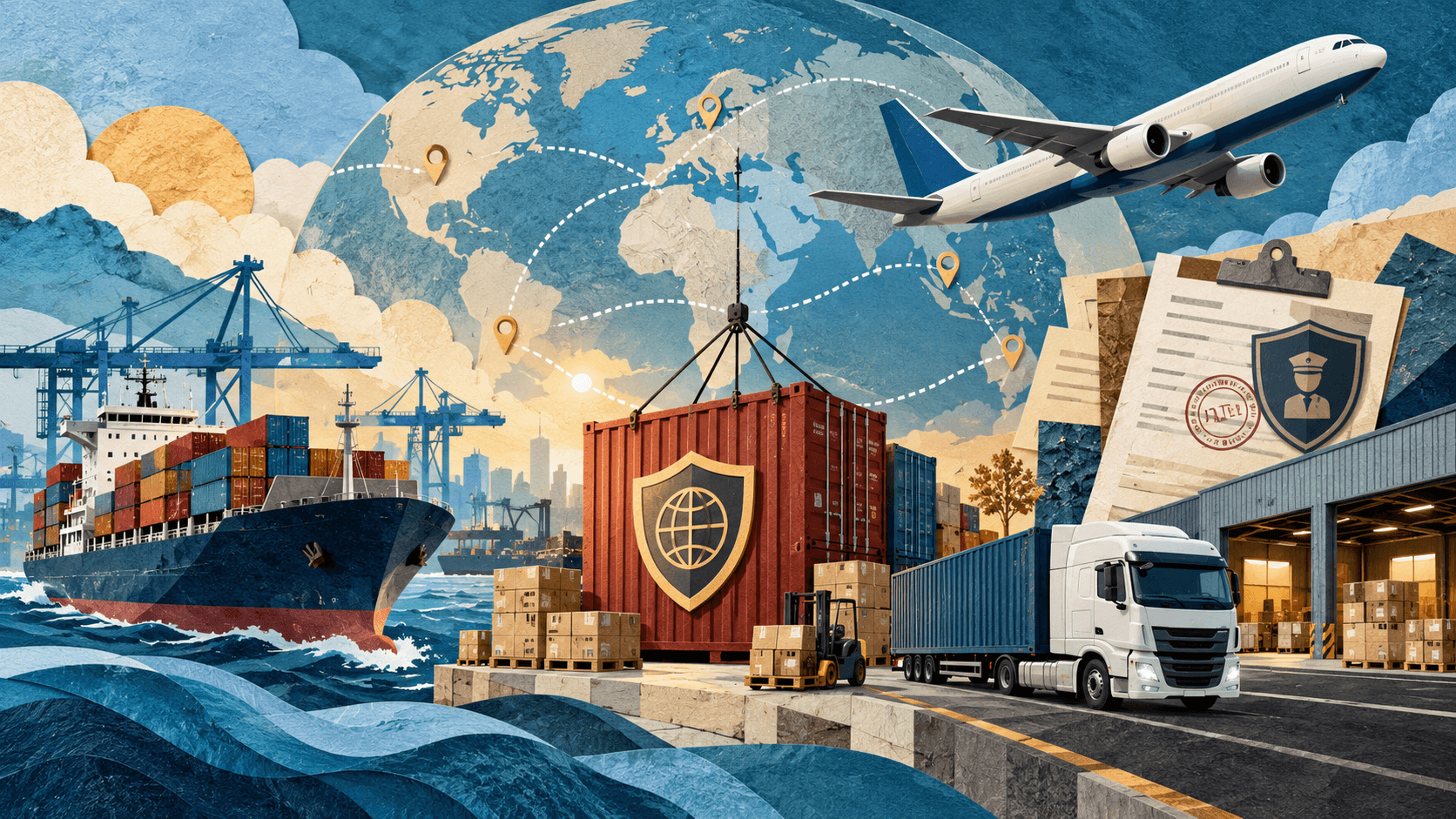
The first time a shipment gets held at customs, most importers discover they do not actually know who was supposed to file what. The supplier says it was handled at origin. The shipping line says they only move the box. Somewhere in that gap sits the forwarder, and whether you picked a good one usually decides how expensive that week becomes.
This guide covers what freight forwarder duties actually include, what quietly falls outside them, what you get billed for, and what to ask before you sign anything. It is written for people arranging their first few international shipments, not for logistics veterans who already know what a house bill of lading is.
Table of contents
- What a Freight Forwarder Is, and What It Is Not
- 1. Planning the Route and Choosing the Mode
- 2. Preparing and Checking the Documentation
- 3. Coordinating Customs Clearance
- 4. Who Pays for What: Incoterms Decide Your Forwarder’s Scope
- 5. Consolidation, Warehousing and Value-Added Services
- 6. Cargo Insurance and Risk Management
- 7. What You Are Actually Being Billed For
- How to Vet a Freight Forwarder: 9 Questions
- When You Do Not Need a Freight Forwarder
- Frequently Asked Questions
What a Freight Forwarder Is, and What It Is Not
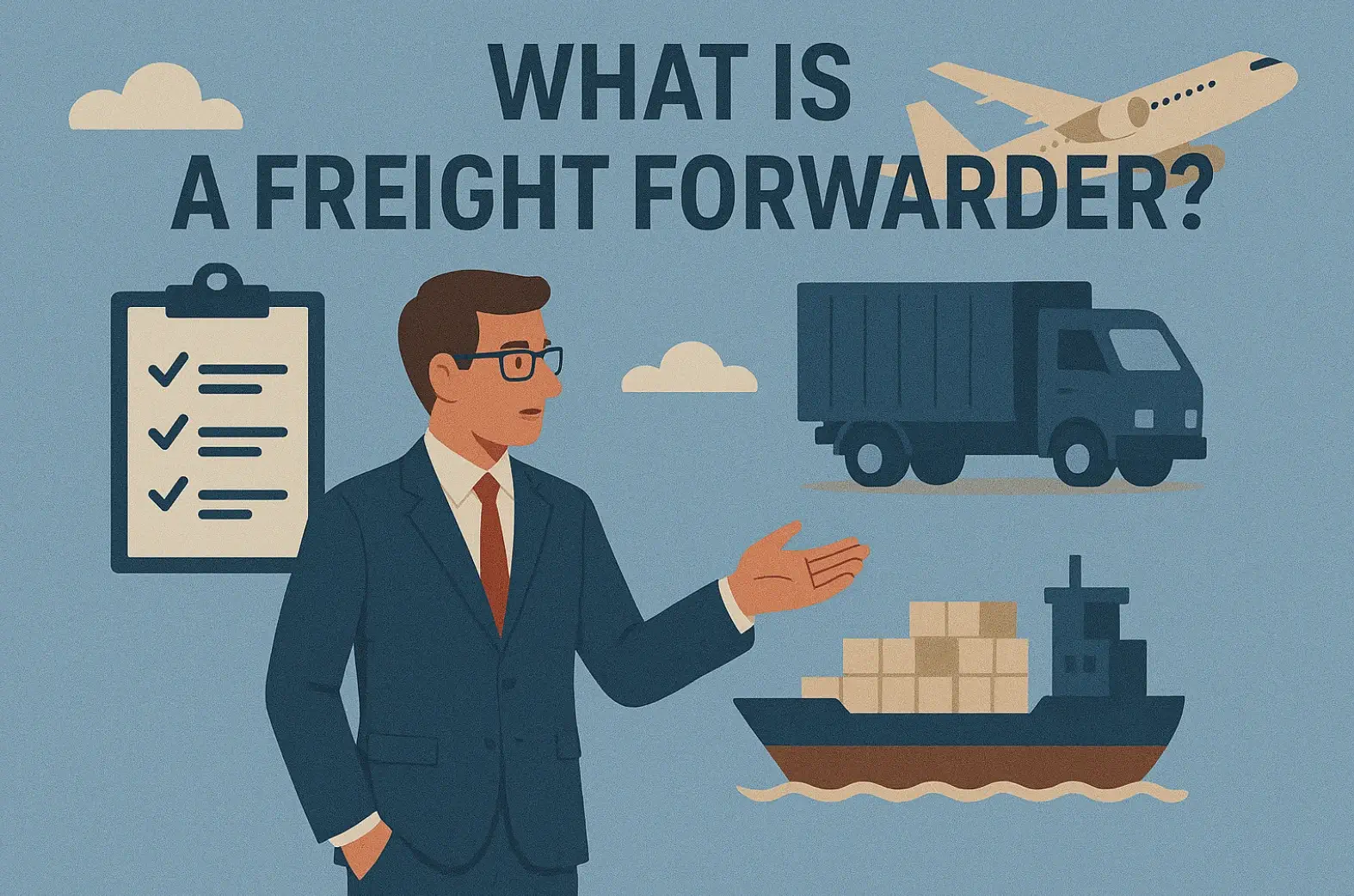
A forwarder usually owns no ships, no planes, and often no trucks. That surprises people. They are an organiser, not a carrier. They buy transport capacity in bulk, resell it in smaller pieces, and manage the paperwork and handoffs in between.
The distinction matters because it changes who is liable when cargo is damaged, and who you chase when a container sits at the port racking up storage fees.
| Role | Owns assets? | What they actually do | You need them when |
|---|---|---|---|
| Freight forwarder | Rarely | Plans routes, books space, handles documents, coordinates the whole door-to-door move | You ship pallets or containers and don’t want to manage five vendors |
| Carrier (shipping line, airline) | Yes | Physically moves cargo between ports or airports only | You have enough volume to contract directly, usually 50+ containers a year |
| Customs broker | No | Files the import declaration and is licensed to do so | Always, though your forwarder often supplies one |
| NVOCC | No vessels, but issues its own bills of lading | Acts as carrier on paper, buys slots from real carriers | Often invisible to you, sitting behind your forwarder |
| 3PL | Warehouses, sometimes trucks | Stores, picks, packs and ships your inventory after it lands | You need fulfilment, not just transport |
| Courier (DHL, FedEx, UPS) | Yes, end to end | Parcel-level door-to-door including customs | Shipments under roughly 70kg where speed beats cost |
The short version: a forwarder is a project manager for your cargo. A carrier is a vehicle. A customs broker is a licence. Many companies sell all three, which is convenient and also makes it harder to tell what you are paying for.
1. Planning the Route and Choosing the Mode
The first real decision is not which carrier. It is ocean, air, rail or road, and that choice usually moves your cost by a factor of five.
Ocean freight is cheap per kilo and slow. Asia to Europe runs roughly 30 to 45 days port to port, longer once you add inland legs. Air freight is five to ten times the cost and lands in three to seven days. Rail on the Asia to Europe corridor sits in between on both counts. A forwarder who is doing their job asks what your inventory holding cost is before recommending one, because sometimes paying for air is cheaper than paying to hold stock.
They also decide FCL or LCL. Full container load means you buy the whole box. Less than container load means your goods share space with other shippers’ cargo. LCL sounds cheaper and often is not, because consolidation and deconsolidation fees at both ends can eat the saving, and shared containers move slower. Below roughly 15 cubic metres LCL usually wins. Above that, ask for both quotes.
2. Preparing and Checking the Documentation
In international shipping, paperwork errors are the most common cause of delay, and the cheapest to prevent. A forwarder prepares, checks and transmits the set that travels with your cargo.
The core documents:
- Bill of Lading (ocean) or Air Waybill (air). This is the contract of carriage and, for an original BL, the title document. Whoever holds it controls the cargo.
- Commercial invoice. Declares value. Customs assess duty against this number, so mistakes here are expensive in both directions.
- Packing list. Piece count, weights, dimensions, carton markings.
- Certificate of origin. Determines whether you qualify for preferential duty under a trade agreement.
- HS code classification. Six to ten digits that decide your duty rate. Misclassification is the single most common source of retroactive customs bills.
- Import licences or permits where the goods require them, such as food, electronics with radio components, cosmetics or textiles.
One nuance worth understanding: a forwarder typically issues a house bill of lading to you, while the actual carrier issues a master bill of lading to the forwarder. If your forwarder collapses mid-shipment, a house BL is weaker than a master BL, which is one reason financial stability is worth checking.
Compliance obligations shift by destination, and the rules that apply to an EU import are not the rules that apply elsewhere. If you are shipping into a new market for the first time, the customs picture usually arrives bundled with a wider set of local requirements, which is a theme we cover in expanding your business to France.
Some markets add currency rules on top of customs. Ukraine, for example, requires most payments for exported and imported goods to settle within 180 days, one of the constraints covered in our guide to Ukraine’s NBU settlement deadlines and currency rules.
3. Coordinating Customs Clearance
Customs clearance is where most first-time importers lose time and money. A forwarder rarely clears customs themselves. They coordinate with a licensed customs broker, who files the declaration on your behalf.
What that coordination covers:
- Classifying goods under the correct HS code and calculating duty and tax exposure before the goods ship, not after
- Filing advance security declarations where required, such as an ISF filing for US ocean imports, which is due 24 hours before loading and carries penalties if late
- Arranging a customs bond or guarantee where the destination requires one
- Managing inspections, holds, and any physical examination
One thing to be clear about: you are almost always the importer of record, which means the legal liability for accurate declarations sits with you, not with your forwarder. Reputable forwarders will tell you this up front. The ones that gloss over it are the ones to worry about.
4. Who Pays for What: Incoterms Decide Your Forwarder’s Scope
Before you can judge whether a forwarder is expensive, you need to know how much of the journey you are actually buying. That is set by the Incoterms rule in your purchase contract, not by the forwarder.
The Incoterms rules published by the International Chamber of Commerce define eleven standard terms that allocate cost and risk between buyer and seller. Four cover most real transactions:
| Term | Seller pays until | You are responsible for | Forwarder scope |
|---|---|---|---|
| EXW (Ex Works) | Goods available at their door | Everything, including export clearance | Widest. You need full origin-to-destination service |
| FOB (Free on Board) | Goods loaded on the vessel at origin port | Ocean freight, destination port, customs, delivery | Most common for first-time importers. Your forwarder handles the main leg onward |
| CIF (Cost, Insurance, Freight) | Destination port, insurance included | Import clearance, duties, inland delivery | Narrower, but watch destination charges, which are often where the “cheap” CIF quote gets recovered |
| DDP (Delivered Duty Paid) | Your door, duties and taxes included | Nothing beyond receiving goods | Seller’s side handles it all |
DDP is the one people misunderstand most. Under DDP the seller carries import duties and taxes in your country, which means someone on their side has to be registered to pay them locally. Sellers quoting DDP almost always do it through a freight forwarder capable of acting as importer of record in the destination market, because without that registration the term cannot legally be fulfilled. Ask who that party is before accepting a DDP quote. A DDP price that cannot name its importer of record is a DDP price that will turn into a surprise invoice.
For direct-to-consumer brands the term choice is also a customer-experience decision. DDP means your customer never gets a courier demanding duties at the door, which is one of the fastest ways to lose a first-time buyer and generate the kind of review that damages the trust signals discussed in our guide to building E-E-A-T for direct-to-consumer brands.
5. Consolidation, Warehousing and Value-Added Services
Consolidation means combining several small shipments into one container so each shipper pays a share rather than the full box. Useful if you are buying from three suppliers in the same region, because one consolidated container usually beats three LCL bookings on both cost and transit time.
Most forwarders also arrange bonded and non-bonded warehousing, labelling, palletising, repacking and cross-docking. Bonded storage is worth knowing about: goods held in a bonded warehouse have not formally entered the country, so duty is deferred until you withdraw them. For seasonal inventory, that deferral is real cash flow. Once that stock reaches your own warehouse, accuracy becomes the next cost to control. Online stores running Magento can use barcode verification at the pick and pack stage to make sure the right inventory goes into the right box.

6. Cargo Insurance and Risk Management
Shipping goods internationally carries risks that most people underestimate: severe weather, port congestion, general average declarations, theft at transhipment points and damage from poor stowage.
Here is the part that catches people out. Carrier liability is not insurance, and it is capped by international convention at levels far below what your cargo is actually worth. Under the Hague-Visby Rules an ocean carrier’s liability is limited to 666.67 SDR per package or 2 SDR per kilogram of gross weight, whichever is higher. Under the Montreal Convention, air cargo is capped at 26 SDR per kilogram, raised from 22 SDR on 28 December 2024 under the treaty’s five-yearly inflation review. At roughly 1.3 US dollars to the SDR, that is about 34 dollars per kilogram by air. For a pallet of consumer electronics, it is a rounding error against the invoice value. If your cargo is worth more than the cap, and it almost certainly is, you need separate cargo insurance.
A competent forwarder will explain the difference between Institute Cargo Clauses A (all risks), B and C (progressively narrower named perils), and will quote a premium that is typically 0.1% to 0.5% of the insured value. If a forwarder tells you the shipment is “covered” without naming the clause set, ask again.
7. What You Are Actually Being Billed For
Forwarder quotes are notoriously hard to compare because the same charge has three different names depending on who is invoicing. Here is the glossary.
| Charge | What it is | Watch for |
|---|---|---|
| Freight cost | The ocean or air leg itself | The only line most quotes lead with. Often 40% or less of the total |
| Origin handling (OTHC) | Terminal handling at the port of departure | Sometimes excluded from “all-in” FOB quotes |
| Destination handling (DTHC) | Terminal handling at arrival | The classic hidden charge in cheap CIF quotes |
| Documentation fee | BL issuance and processing | Should be a flat fee, not a percentage |
| Customs clearance fee | Broker’s fee for the declaration | Separate from the duty itself |
| Duty and import VAT | Government charges | Pass-through. A forwarder marking this up is a red flag |
| Demurrage | Daily charge for leaving a container inside the port past free time | Accrues fast. Free time is usually 3 to 7 days |
| Detention | Daily charge for keeping the container outside the port too long | Often confused with demurrage. They are different clocks |
| Chargeable weight | Whichever is higher: actual weight or volumetric weight | Air freight volumetric divisor is usually 6000. Bulky-light cargo gets expensive |
| Fuel and currency surcharges | BAF, CAF and similar adjustments | Legitimate, but should be disclosed, not discovered |
Two practical rules. First, always ask for an all-in landed cost quote, not a freight rate, and specify the Incoterm you are quoting against so the comparisons are like for like. Second, confirm the billing currency and who absorbs exchange movement between booking and invoice, because on a 40-day ocean transit that spread is not trivial. If you are managing supplier payments across several currencies already, the same discipline applies here as in managing money as a location-independent business.
How to Vet a Freight Forwarder: 9 Questions
Most forwarder websites say the same things. These questions separate them.
- Are you licensed, and under what? In the US, look for an FMC-issued OTI licence for ocean and IATA accreditation for air. Elsewhere, ask for FIATA membership. Licence numbers are publicly verifiable. Verify them.
- Do you have direct experience on my exact lane? “We ship worldwide” is not an answer. Ask for the specific origin-destination pair and roughly how many shipments a month they run on it.
- Who clears customs, you or a third party? Both answers are fine. An evasive answer is not.
- What is your cargo insurance offering, and which Institute Cargo Clause? Clause A is all-risks. B and C are progressively narrower named perils. A forwarder who says the shipment is “covered” without naming the clause set either does not know or does not want you to ask.
- Show me a sample invoice from a comparable shipment. This reveals the fee structure faster than any quote.
- What is my named point of contact, and what happens at 2am when a container is held? Escalation path, not a ticketing address.
- What tracking do you provide, and is it milestone-based or live? Milestone updates at departure, transhipment and arrival are the realistic standard. Anyone promising live GPS on ocean freight is overselling.
- What is your free time at destination, and what are your demurrage rates? Get this in writing before booking.
- How long have you been trading, and can I see references on this lane? Forwarder insolvency mid-shipment is rare but ruinous.
If your forwarder sits eight or nine hours away from you, a problem raised at 4pm your time gets looked at tomorrow. That is a real cost on a time-sensitive shipment, and it is worth deciding deliberately rather than discovering it during a crisis. The same coordination discipline covered in managing time zones in business applies directly to logistics vendor selection.
When You Do Not Need a Freight Forwarder
Worth saying plainly, because most articles on this topic are written by forwarders.
- Shipments under roughly 70kg. A courier is usually faster and cheaper door to door, with customs included.
- You already have contracted carrier rates. If you move enough volume to hold a direct service contract, a forwarder adds a margin you may not need.
- Your supplier genuinely quotes credible DDP. If they can name the importer of record and the landed cost is competitive, let them own the complexity.
- Domestic-only movement. A transport broker or carrier is the right vendor. Forwarding expertise is about crossing borders.
Red Flags
- A quote that is only a freight rate with no destination charges listed
- Reluctance to name the customs broker
- No verifiable licence or association membership
- Marking up duty and tax rather than passing it through
- Quoting DDP without being able to name the importer of record
- Pressure to accept originals-surrendered or telex release without explaining what you are giving up
A note on the figures in this guide
Liability caps, filing deadlines and licensing requirements change, and they differ by jurisdiction. The Montreal Convention limits are reviewed every five years by ICAO and were last revised on 28 December 2024. Hague-Visby applies only where the destination or origin country has enacted it, and some jurisdictions apply the Hamburg Rules instead, which set higher caps. ISF requirements apply to US ocean imports specifically and have no direct equivalent in most other markets.
Figures here are current as of the date above. For anything you are about to act on, verify against the primary source, which means ICAO for air liability limits, your national customs authority for filing requirements, and the carrier’s own bill of lading terms for what they have actually agreed to. That includes verifying against them rather than against this page.
Frequently Asked Questions
Planning the route and transport mode, booking carrier space, preparing and checking shipping documents, coordinating customs clearance through a licensed broker, arranging consolidation and warehousing, organising cargo insurance, and managing exceptions such as delays, holds and damage claims.
No. A forwarder organises the movement of goods. A customs broker holds a licence to file import declarations with the customs authority. Many forwarders employ or subcontract brokers, but they are separate functions with separate liability.
Usually not. They buy capacity in bulk from carriers and resell it. A small number of large operators own assets, but the core business model is organisation rather than transport.
There is no flat rate. You pay the freight cost plus origin and destination handling, documentation, customs clearance, and any surcharges. On many ocean shipments the freight leg is under half the total. Always request an all-in landed cost quote against a specific Incoterm.
In most jurisdictions, you are. As importer of record, the legal liability for a correct declaration sits with you, even when a broker files it on your behalf.
Yes. Carrier liability is capped by international convention at roughly 2 SDR per kilogram for ocean and 22 SDR per kilogram for air, which is far below the value of most commercial cargo. Cargo insurance is separate and typically costs 0.1% to 0.5% of insured value.
Demurrage is charged when a container stays inside the port terminal beyond its free time. Detention is charged when the container stays outside the terminal, in your possession, beyond the allowed period. They are separate clocks and can run at the same time.
This guide is written for businesses arranging their first international shipments. It is compiled from published carrier terms, ICC Incoterms 2020, and the text of the Hague-Visby and Montreal Conventions. It is not legal or customs advice, and it does not replace a licensed customs broker in your jurisdiction.
