How to Make Your Roof Last Longer: A Homeowner’s Maintenance Guide
Realistic roof lifespans, a twice-a-year checklist you can do from the ground, and the attic and gutter habits that add years to any roof.
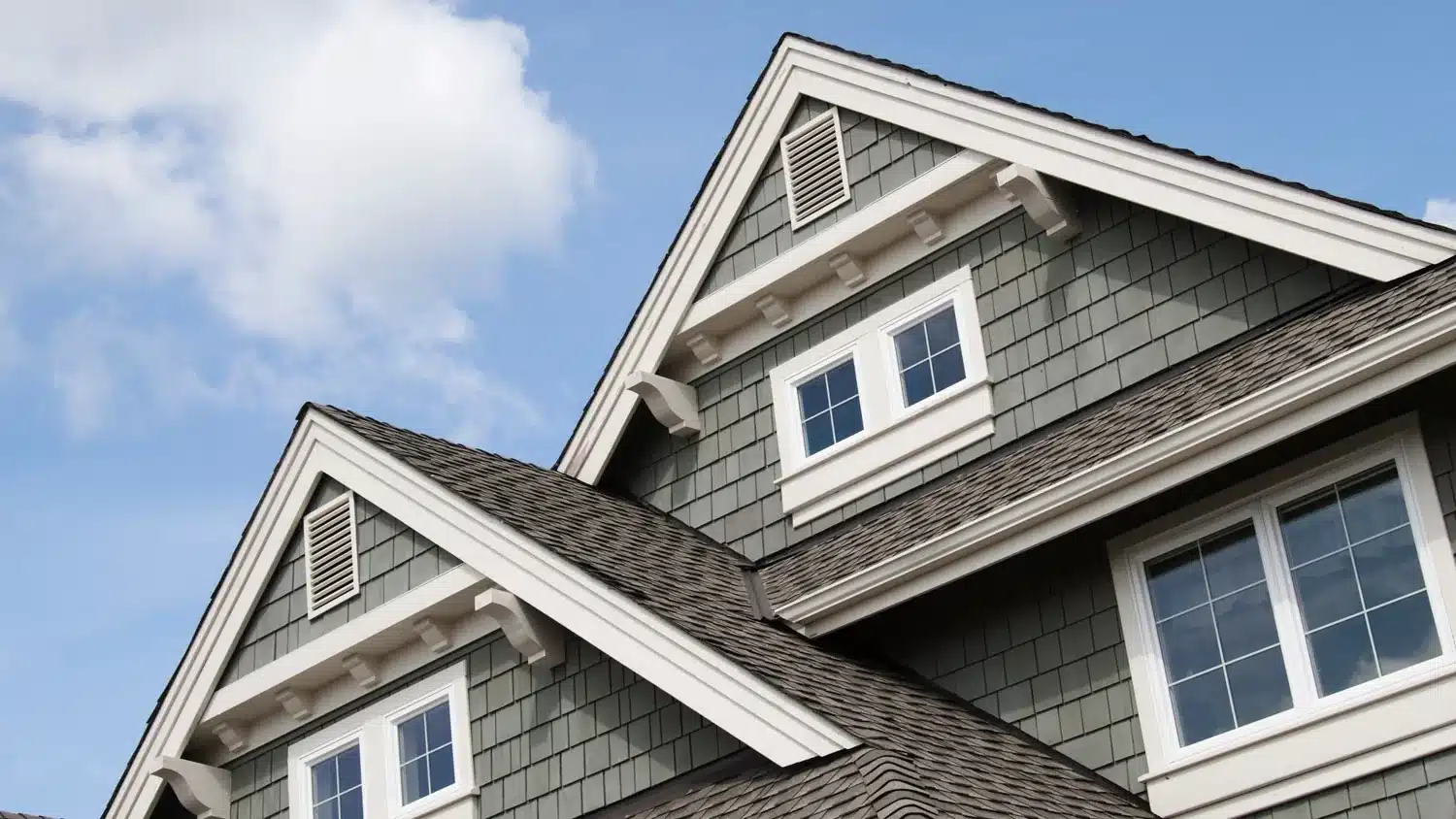
Most roofs do not fail because of one big storm. They wear out early because of small things nobody checked: a gutter that overflowed every winter, a bathroom fan venting into the attic, a strip of flashing around the chimney that dried out and cracked. Catch those early and most roofs reach the service life their materials were designed for. Some go well past it.
The short answer: inspect your roof from the ground and the attic every spring and fall, keep gutters and valleys draining, keep the attic ventilated and air sealed, replace worn flashing and sealant early, and leave anything that requires climbing to a licensed roofer. Do those things consistently and small problems stay small.
Below you will find roof lifespan numbers by material, a twice-a-year roof maintenance checklist, the attic ventilation and ice dam problems that quietly age shingles, what to do after storm damage, and a simple way to decide whether to repair or replace. Most of it applies anywhere in the US. Where climate changes the advice, we use the coastal Northeast, including Long Island, as the example, because salt air, nor’easters and freeze-thaw cycles all show up on roofs there.
Table of contents
- How Long Does a Roof Last?
- What Wears a Roof Out Early
- A Twice-a-Year Roof Maintenance Checklist
- Attic Ventilation: The Half of the Roof You Never See
- Coastal Northeast Roofs: Ice Dams, Nor’easters and Salt Air
- After a Storm: Check, Document, Then Call
- Flat and Low-Slope Roofs on Houses, Garages and Mixed-Use Buildings
- Repair or Replace? A Simple Way to Decide
- Upgrades Worth Paying For When You Re-Roof
- How to Choose a Roofer You Can Trust
- A Year-Round Roof Care Calendar
- How Long Will My Roof Last? Answers on Inspections, Ice Dams and Re-Roofing
- Two Inspections, Clean Gutters and the Right Roofer
How Long Does a Roof Last?
It depends on the material, the climate and, more than most people expect, the installation. The National Roofing Contractors Association says in its consumer roofing guidelines that most new roofs are designed for about 20 years of useful service, with slate, clay tile and some metals lasting longer. The ranges below are typical for a roof that was installed correctly and looked after.
| Roofing material | Typical service life | What usually ends it early |
|---|---|---|
| 3-tab asphalt shingles | 15 to 20 years | Wind lifting the tabs, granule loss, a hot attic |
| Architectural (laminated) asphalt shingles | 20 to 30 years | Trapped attic heat and moisture, failed flashing |
| Standing seam metal | 40 to 60 years or more | Worn sealant and fasteners at penetrations, salt corrosion near the coast |
| Cedar shakes | 20 to 30 years | Moss and rot on shaded slopes, debris left in valleys |
| Clay or concrete tile | 50 years or more | Tiles cracked by foot traffic, aging underlayment |
| Natural slate | 75 years or more | Rusted nails and flashing (the stone usually outlives both) |
| Low-slope membranes (EPDM, TPO, modified bitumen) | 15 to 25 years | Ponding water, seam failures, clogged drains |
These ranges are typical estimates, not guarantees. Two roofs with the same shingle can differ by a decade depending on installation, attic ventilation, sun exposure and how quickly small problems get fixed.
Ignore the number on the warranty when you estimate your own roof. A 50-year or lifetime shingle warranty is usually prorated, covers manufacturing defects rather than normal wear, and can depend on the attic meeting the manufacturer’s ventilation requirements. It describes what the manufacturer will pay for on paper, which is a different question from how long the roof will keep water out.
Roof numbers worth remembering
- About 20 years: the useful service life most new roofs are designed for, according to NRCA.
- Twice a year: spring and fall inspections, plus one after any major storm.
- 18 degrees (about a 4-in-12 pitch): the minimum slope NRCA recommends for asphalt shingles.
- About half: the share of attic vent area that should sit at or near the ridge, with the rest at the eaves.
- 48 hours: by the usual rule of thumb, water still standing on a flat roof after this long counts as ponding.
- One: the number of re-covers many building codes allow before a full tear-off is required.
What Wears a Roof Out Early
When a roof gives out years ahead of schedule, the cause is almost always on this list:
- Water that sits too long. Overflowing gutters, clogged valleys and ponding on flat sections keep the roof edge and decking wet.
- Heat and moisture trapped in the attic. A hot, damp attic ages shingles from underneath and rots the sheathing they are nailed to.
- Wind at the edges. Uplift starts at eaves, rakes and ridges, where a few loose shingles turn into a missing section during the next storm.
- Tired roof flashing and sealant. Most leaks start where something breaks through the roof (chimneys, skylights, vent pipes, walls), not in the middle of a slope.
- Installation shortcuts. A missing drip edge, reused flashing or too few nails cannot be seen from the street and show up years later as leaks.
A homeowner can watch for the first four without any special skills. The fifth is the reason the contractor you hire matters as much as the shingle you choose.
A Twice-a-Year Roof Maintenance Checklist
A lot of roof maintenance tips online assume you will climb up there. You should not. NRCA recommends checks in spring and fall and advises homeowners to stay on a secured ladder and off the roof whenever possible, since walking on shingles can crack them and a fall can be serious. Everything below can be done from the ground, a ladder or the attic.
From the ground, with binoculars
- Missing, cracked, curled or cupped shingles, especially along the eaves, rakes and ridge
- Dark patches or bald spots where the protective granules have worn away
- A ridge line or roof plane that dips, which can point to wet or weakened decking
- Loose, bent or rusted flashing around the chimney, skylights and vent pipes
- Gutters pulling away from the fascia, and downspouts that dump water against the foundation
- Moss or thick lichen on shaded slopes
From the attic, with a flashlight
Go up after a heavy rain if you can, when leaks are easiest to trace.
- Daylight showing through the roof boards anywhere other than at the vents
- Water stains, dark rings or soft spots on the underside of the sheathing
- Damp, matted or compressed insulation
- Rusty nail tips, or nails covered in frost on cold mornings, a sign that warm, moist air from the house is reaching the roof deck
- A musty smell, or bathroom and kitchen fans that vent into the attic instead of outdoors
Gutters, downspouts and trees
Clean gutters at least twice a year, more often if tall trees hang over the house. Gutter guards reduce how often that needs to happen, but they do not end it: fine debris and shingle granules still collect, and some designs can hold ice at the eaves in winter. While you are cleaning, look at what came out. A sprinkle of granules is normal on a new roof. A thick layer of them on an older roof is one of the clearer signs you need a new roof soon.
Trim branches so they do not touch or hang over the roof. They drop leaves into the gutters, scrape shingles in the wind and give squirrels a bridge to the eaves. Leave anything near power lines, or anything that needs a chainsaw on a ladder, to a tree service.
Attic Ventilation: The Half of the Roof You Never See
Shingles age from both sides. The sun works on the top surface, and a poorly ventilated attic works on the underside. In summer, trapped heat bakes the shingles from below. In winter, warm, humid air from the living space condenses on the cold roof deck, which leads to mold and rotted sheathing. The same escaping heat also warms the roof enough to melt snow from underneath, which is how ice dams start.
Good attic ventilation is balanced. Air comes in low through soffit vents at the eaves and leaves high through a ridge vent or roof vents. NRCA suggests splitting the vent area roughly evenly, with about half at or near the ridge. Two common mistakes break that balance: insulation pushed tight against the soffits, which blocks the intake, and mixing different exhaust vents on one roof, such as a ridge vent next to a powered fan, so they pull air from each other instead of from the eaves.
Ventilation also has a paperwork side. Shingle manufacturers can make warranty coverage conditional on meeting their ventilation requirements, so an attic that cannot breathe may leave you with less coverage than you think.
Vents only solve half the problem. Gaps around ceiling lights, the attic hatch and plumbing stacks let warm, moist air into the attic in the first place, so ask whoever checks your ventilation to look at air sealing and insulation at the same visit.
Coastal Northeast Roofs: Ice Dams, Nor’easters and Salt Air
Climate decides which of these problems shows up first. On Long Island and along much of the Northeast coast, roofs deal with several stresses in the same year:
- Ice dams. Snow melts over a warm attic, runs down and refreezes at the cold eave. The ridge of ice backs water up under the shingles. Air sealing, insulation and ventilation fix the cause, and an ice and water barrier along the eaves limits the damage. Leaks from ice dams often show up first as stains on upper walls and ceilings, so fix the roof before you repaint, especially under delicate decorative wall finishes like limewash or grasscloth, which show water marks clearly.
- Nor’easters and tropical storms. Wind-driven rain gets under loose shingles and past worn flashing. The Atlantic hurricane season runs from June through November, which makes the fall inspection the one to never skip here.
- Salt air. Close to the water, exposed fasteners, flashing and metal roofing can corrode faster than they would inland. Corrosion-resistant fasteners and regular flashing checks help.
- Humidity and shade. The black streaks on north-facing slopes are usually algae, not dirt. Algae-resistant shingles slow it down, and a gentle, low-pressure wash with a cleaner made for roofs removes it. Pressure washing strips granules and takes years off the roof.
If an ice dam forms, do not chip at it with an ice pick or shovel, and do not hose it down or aim a heat gun at it. NRCA advises against all of these because they damage shingles and flashing, and it notes that electric heat cables have limited effectiveness. Pull snow off the lower few feet of the roof with a roof rake while standing on the ground, and call a roofer if the ice is thick or the roof is steep.
After a Storm: Check, Document, Then Call
The day after a storm is when homeowners make the most expensive mistakes, usually by climbing a wet ladder or signing with the first crew that knocks on the door. A calmer sequence protects both the house and the insurance claim:
- Stay off the roof. Look from the ground and from inside the attic.
- Photograph everything with the date visible: shingles in the yard, dented gutters, ceiling stains, wet insulation. It is much harder to prove storm damage weeks later.
- Limit further damage if it is safe, for example by moving belongings away from a leak and catching the water. Leave tarping the roof to a professional.
- Call your insurer before you commit to repairs and ask whether they want an adjuster to see the damage first.
- Be careful with door-to-door storm crews. Ask for a local address, a license and proof of insurance, and read any contract that assigns your insurance claim to the contractor very closely before signing.
Flat and Low-Slope Roofs on Houses, Garages and Mixed-Use Buildings
Plenty of houses with a shingled main roof also have a low-slope section somewhere: a porch roof, a rear addition, a shed dormer, a detached garage. Those areas cause more than their share of leaks because shingles depend on gravity to shed water. NRCA does not recommend asphalt shingles on slopes below 18 degrees (roughly a 4-in-12 pitch), yet shingles on near-flat additions are still common.
A flat roof needs different habits from a shingled one:
- Check drains, scuppers and gutters every season and after storms. One clogged drain can turn an ordinary rain into standing water.
- Watch for ponding. The usual rule of thumb is that water still sitting on the roof 48 hours after rain is a problem, because it speeds up membrane aging and finds every weak seam.
- Walk on it only when you must, and stay off blisters and seams.
- Keep every invoice and warranty. NRCA points out that low-slope material manufacturers may not offer material warranties to homeowners, so the contractor warranty may be the only coverage you have.
If you are planning a new detached garage or an addition, settle the roof pitch and drainage before anything else, because fixing a roof that is too flat for its material costs far more after the structure is built. Our garage construction guide, written for Alberta winters, covers the planning side in detail.
On Long Island the line between residential and commercial roofing gets blurry. Many owners live in a two-family house, own a storefront with an apartment above it or sit on a co-op board, and those flat roofs usually carry the same EPDM, TPO or modified bitumen systems found on office buildings. NRCA even publishes separate guidance on choosing a steep-slope residential contractor and a low-slope commercial one. If your property sits in that middle ground, compare contractors who offer commercial roofing solutions for low-slope membranes, rather than asking a shingle crew to patch a seam they rarely work on.
Repair or Replace? A Simple Way to Decide
A leak does not automatically mean a new roof. Many leaks come from loose flashing or one damaged area, and a good roofer can fix those for a fraction of the cost of replacement. What you are really deciding is whether a repair solves a problem or just props up a roof that is already near the end of its life.
| Factor | Repair usually makes sense | Replacement is usually the better call |
|---|---|---|
| Age | Less than about two-thirds of the expected service life | Past about three-quarters of the expected service life |
| Damage pattern | Limited to one area, such as a flashing leak or a few blown-off shingles | Curling, cracking or bald spots across several slopes |
| Leaks | One leak with a clear, traceable source | New leaks in different places each season |
| Decking | Dry and firm when checked from the attic | Soft spots, sagging or rot in several areas |
| Repair history | The first repair in years | Several repairs in the past two or three years |
Laying new shingles over old ones saves the tear-off cost, but it hides the decking, adds weight and makes it harder to install flashing and an ice barrier properly. NRCA also notes that building codes in many areas allow only one re-cover before a full tear-off is required, so a roof that has already been re-covered once usually has no second chance.
Upgrades Worth Paying For When You Re-Roof
If replacement is coming, a few details extend the life of your roof more than any premium shingle upgrade:
- An ice and water barrier at the eaves, in valleys and around chimneys and skylights
- Synthetic underlayment over the rest of the deck, which tears and wrinkles less than traditional felt
- Drip edge along the eaves and rakes so water clears the fascia
- New flashing rather than reused pieces, with step flashing at every wall
- Wind-rated shingles and the manufacturer’s high-wind nailing pattern in exposed or coastal locations
- Algae-resistant shingles on shaded, humid lots
- A ventilation plan designed with the new roof instead of added later
In hurricane-exposed areas, ask about the FORTIFIED Roof standard from the Insurance Institute for Business and Home Safety, which goes beyond typical code minimums. Some insurers discount premiums for it, so check with yours before you sign a contract.
Planning solar panels? Look at the roof first. Panels have to be removed and reinstalled when the roof underneath is replaced, which adds a real cost to that future job. If your roof is past the midpoint of its expected life, re-roofing before the panels go up is usually cheaper overall. The same goes for anyone building toward a battery, EV charger and a home energy management system that coordinates them, since the roof is the part of that setup that is hardest to redo later.
How to Choose a Roofer You Can Trust
Almost every section of this guide ends with a professional doing the work, so the choice of contractor carries a lot of weight. These checks separate careful roofers from the rest:
- License and insurance. In many areas, including Nassau and Suffolk counties, home improvement contractors need a county license. Verify it with the county yourself and ask for liability and workers’ compensation certificates sent directly by the insurer.
- A detailed written proposal. It should name the shingle brand and product line, the underlayment, how flashing and ventilation will be handled, tear-off or re-cover, cleanup, the payment schedule and warranty terms. NRCA suggests collecting three or four proposals.
- Two warranties, clearly separated. The manufacturer covers the material. The contractor covers the installation, and NRCA notes there is no industry standard for how long; one or two years is common, so anything longer is worth weighing.
- Manufacturer certification. Shingle makers train and certify installers, and certified contractors can often register enhanced warranties.
- Reviews read closely. How a company answers complaints tells you more than its star average.
A word on searching online. The three businesses that appear in Google’s map results are picked largely on proximity, relevance and review activity, which makes them easy to find but says nothing about their workmanship. Our guide for service businesses on how Google chooses those local map listings explains the ranking factors, and they work the same way for roofers. Treat the list as a starting point and let the written proposals decide.
A Year-Round Roof Care Calendar
| When | What to do |
|---|---|
| Early spring | Ground and attic check after winter, gutter cleaning, a look at ceilings below the eaves for ice dam stains |
| Late spring | Tree trimming before summer storms, a check that bathroom and kitchen fans vent outdoors |
| Summer | Notice upstairs rooms that run hot, and book repairs or replacement while the weather is dry |
| Early fall | Full inspection before storm season peaks, flashing and sealant check, gutters cleared after the leaves drop |
| Winter | Roof rake on the lower edge after heavy snow, watch for large icicles, look for frost on attic nails |
| After any major storm | Ground check, dated photos, then calls to a roofer and your insurer before anyone climbs up |
How Long Will My Roof Last? Answers on Inspections, Ice Dams and Re-Roofing
Most new roofs are designed for about 20 years of useful service, according to the National Roofing Contractors Association. In practice, 3-tab asphalt shingles tend to last 15 to 20 years, architectural shingles 20 to 30, a standing seam metal roof 40 years or more, and slate far longer. Installation quality, attic ventilation, climate and maintenance decide where your roof lands in that range.
Check the roof yourself twice a year, in spring and fall, from the ground and from the attic. Add a professional roof inspection every year once the roof is past about 10 years old, after any major storm, and before you buy or sell a house.
The clearest signs are shingles that are curled, cracked or missing across several slopes, heavy granule loss in the gutters, bald patches, a sagging roofline, daylight through the roof boards and leaks that keep returning in different places. A roof near the end of its expected lifespan that shows two or more of these is usually due for replacement quotes.
Yes, within limits. Keeping gutters clear, fixing attic ventilation, replacing failed flashing and sealant, trimming overhanging branches and repairing small problems quickly can add years. Maintenance cannot reverse widespread granule loss or rotted decking, so it works best on a roof that is still in reasonable shape.
They help by reducing clogs and overflow, which protects the roof edge and fascia. They still need an occasional check and cleaning because fine debris and shingle granules get through. Fit matters more than brand, and in snowy areas it is worth choosing a design that does not trap ice at the eaves.
Ice dams form when heat escaping into the attic melts snow on the upper roof and the water refreezes at the colder eave. Air sealing the attic floor, adding insulation and balancing attic ventilation deal with the cause. When you re-roof, an ice and water barrier along the eaves limits damage. Avoid chipping the ice or hosing the roof, since both damage shingles.
For most homeowners, no. NRCA advises staying on a secured ladder and off the roof whenever possible. Binoculars from the ground and a flashlight in the attic reveal most problems, and a roofer can safely check the rest.
Sometimes. Many building codes allow only one re-cover before a full tear-off is required. A re-cover saves money up front, but it hides the condition of the decking and makes it harder to install new flashing and an ice barrier properly, so a tear-off is usually the better long-term choice.
Two Inspections, Clean Gutters and the Right Roofer
A long-lasting roof comes from a short list of habits repeated every year: look at it in spring and fall, keep water moving off it, keep the attic dry and ventilated, and fix small problems while they are still small. None of that requires you to stand on the roof. It does take a little attention, and it pays back in more years between replacements and far fewer surprise leaks.
About this guide: the maintenance intervals, ice dam advice and contractor checklist in this article follow the National Roofing Contractors Association’s consumer guidance. We link to County Roofing Systems, a Long Island contractor that works on low-slope and multi-family roofs, as an example of the residential and commercial overlap described above. Growwwth has no commercial relationship with the company.
