What Is a Home Energy Management System, and What Does It Actually Control?
A home energy management system sounds technical until the electric bill arrives, the EV needs charging, and the power flickers during a storm. Then the idea becomes simple: the house needs a better way to decide when energy is used, stored, or saved. HEMS Is the Home’s Energy Coordinator A home energy management system, often […]
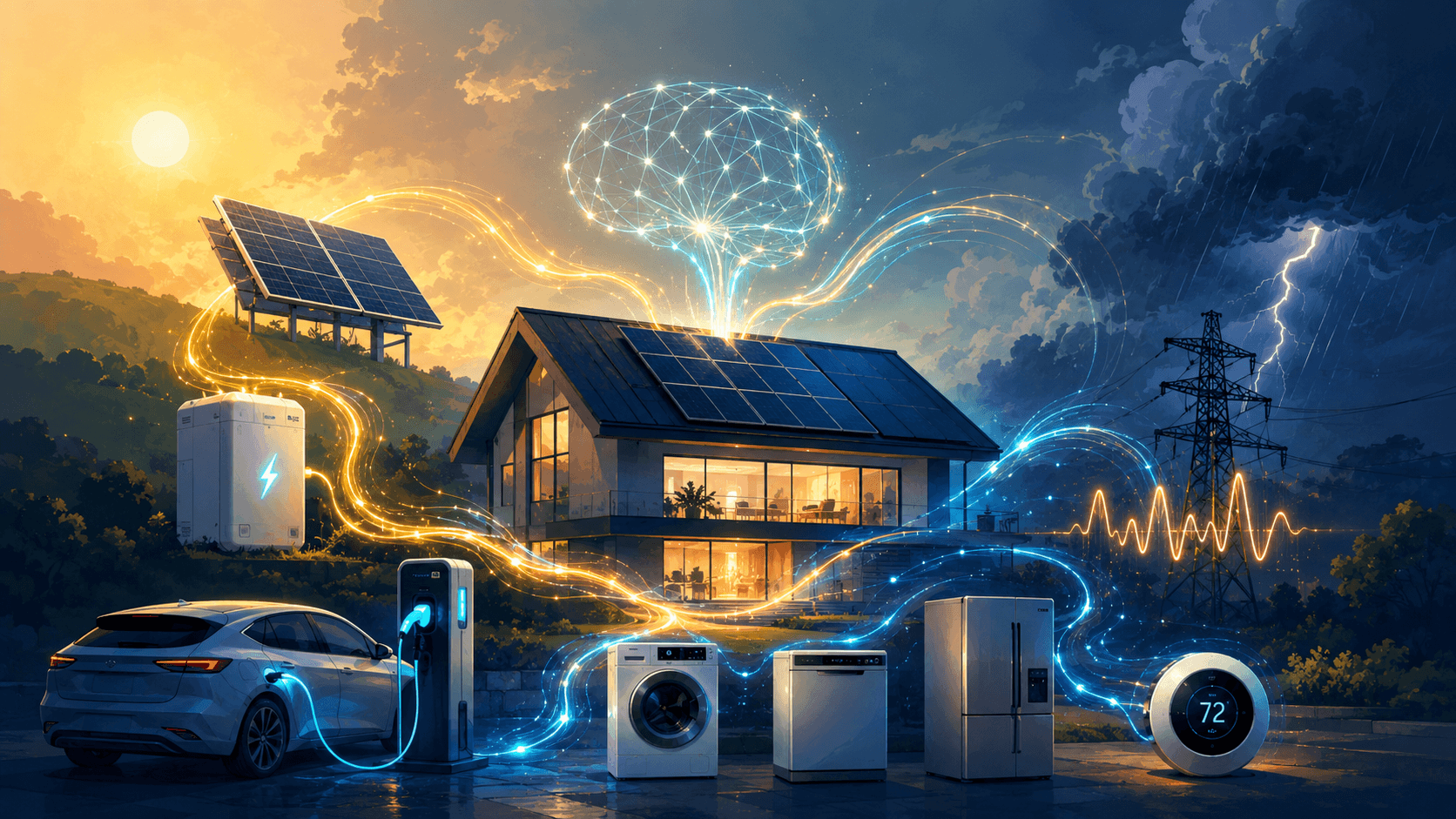
A home energy management system sounds technical until the electric bill arrives, the EV needs charging, and the power flickers during a storm. Then the idea becomes simple: the house needs a better way to decide when energy is used, stored, or saved.
HEMS Is the Home’s Energy Coordinator
A home energy management system, often shortened to HEMS, monitors and helps control how electricity is generated, stored, and consumed in a home. It may connect solar panels, batteries, EV chargers, smart appliances, thermostats, and utility rate signals. The EPA’s ENERGY STAR Smart Home Energy Management Systems program is the clearest public reference point for what a real system should include: at minimum a certified smart thermostat, lighting, and monitored or controlled plug loads, with EV chargers and appliances layered on top as your setup grows.
It Is More Than an App
An app may be the part homeowners see, but the system behind it matters more. The HEMS needs data from the electrical panel, inverter, battery, EV charger, and sometimes weather or tariff sources. If those pieces do not communicate well, the app may show information without making useful decisions.
Three Levels, From Simple to Whole-Home
Not every home energy management system requires a full installation. There are roughly three tiers worth knowing about before you start shopping.
Smart plugs and a connected thermostat are the cheapest entry point, letting you schedule and monitor individual devices through an app. This is a reasonable place to start if you’re just curious about the category and don’t yet own solar or a battery.
App-based monitoring for solar or battery systems shows you what’s happening, production, usage, storage level, but doesn’t necessarily make decisions on your behalf. Useful for visibility, limited for actual coordination.
Whole-panel systems sit at the top of the range, actively coordinating solar, battery, EV charging, and major appliances together, shifting loads, protecting backup reserve, and responding to utility rate signals automatically. This is the tier that actually does the coordination work this article is about, and it’s also where the buying decision gets more complex, covered in more depth in sites.gallery’s guide to coordinating solar, battery storage, and EV charging.
What “Real” Actually Looks Like
The ENERGY STAR SHEMS certification is a useful shortcut precisely because it’s independently verified rather than a vendor’s own description. To qualify, a system has to demonstrate it can schedule devices automatically, suggest energy-saving actions based on actual usage patterns, and adjust behavior based on occupancy, not just display data on a dashboard. Samsung’s SmartThings Energy was the first mass-market platform to earn it. Asking a vendor directly whether their system, or the components inside it, carry this certification is a faster way to separate genuine automation from a well-designed monitoring app than working through every feature claim individually.
The scenario test works well alongside the certification question. Before buying, ask what the system does on a sunny afternoon, an expensive evening, a storm warning, and a grid outage, and see how Sigenergy smart home solution or any other platform you’re considering actually answers it. A vendor that can walk through all four scenarios specifically, not just in marketing language, is telling you more than a certification badge alone can.
Ask for Plain Scenarios
Before buying, ask what the system does on a sunny afternoon, an expensive evening, a storm warning, and a grid outage. Homeowners comparing can use those scenarios to judge whether the platform is a true energy manager or just a dashboard.
A strong proposal should also include a simple operating story. What happens on a normal weekday, during a peak-rate evening, when solar production is high, and when the grid goes down? These examples are easier to understand than a feature list and reveal whether the system is truly coordinated.
Homeowners should also think about future loads. A second EV, a heat pump, an induction range, or a larger battery can change the energy profile quickly. A HEMS that cannot adapt may feel outdated just as the home becomes more electric. If rooftop solar is part of that plan, check how much life your roof has left first, because panels have to come off when the roof underneath is replaced.
Finally, usability matters. The best energy management system should make choices visible and adjustable without turning the homeowner into a full-time operator. Clear modes, plain alerts, and understandable energy flows help build trust.
The installer should explain the difference between monitoring and control. Monitoring tells the homeowner what happened; control changes what happens next. A system that only reports energy use may still be useful, but it should not be sold as full automation if it cannot schedule loads, protect battery reserve, or respond to rate signals.
It is also worth asking how the system behaves when internet service is down. Some features may depend on cloud access, while basic backup or local controls may continue. That distinction matters during storms, when the same outage that affects the grid can also disrupt broadband service.
A HEMS should be judged against the household’s actual routines. A remote worker with daytime solar access, a commuter who charges an EV at night, and a family with medical equipment all need different priorities. The strongest systems make those priorities explicit instead of forcing every home into the same default mode.
The Money Side Most Guides Skip
Beyond whatever a HEMS itself costs, there’s real money available through utility demand response programs, and it’s worth understanding before you buy anything.
Enrolling a compatible smart thermostat or connected device in a utility demand response program typically pays a one-time enrollment bonus, often $25 to $85, plus ongoing annual credits, commonly $20 to $50 or more, in exchange for allowing small, temporary adjustments during peak demand hours, usually a few degrees for a few hours on the hottest summer afternoons. Google’s Nest Rush Hour Rewards program, the largest of its kind, operates through partnerships with over 100 utilities across the US and Canada and paid participants more than $40 million in 2024 alone.
One current detail worth getting right: the federal tax credit that previously applied to smart thermostat purchases, Section 25C, expired December 31, 2025, under recent legislation. It no longer applies to purchases made in 2026. Utility-level rebates and demand response payments are separate programs, funded by individual utilities rather than the federal government, and remain active regardless of that change. DSIRE, the Database of State Incentives for Renewables and Efficiency, maintained by NC State’s Clean Energy Technology Center, is the most comprehensive way to search what’s actually available in your specific area by ZIP code, rather than assuming a program that applies elsewhere applies to you too.
Who Actually Needs One
A home energy management system makes the most sense once you have more than one thing competing for power or attention, solar plus a battery, an EV charger plus time-of-use electricity rates, or several smart devices you’d rather not manage through five different apps. If you just have a single smart thermostat, you likely don’t need a dedicated HEMS yet, the thermostat’s own app already handles that. The decision point is usually the second or third connected device, that’s when a coordinating layer starts saving real time instead of adding another thing to check.
Starting Small vs Going All-In
You don’t have to install a whole-home system on day one. Smart plugs and a connected thermostat are a low-cost way to get comfortable with the basic idea, scheduling, remote control, usage visibility, before committing to a whole-panel system. If you already know you’re heading toward coordinating solar, battery, and EV charging together.
Support is another practical checkpoint. The homeowner should know who services the system, who updates the software, and who handles a mismatch between the battery, charger, inverter, or utility program. Energy management touches several parts of the home, so clear support responsibility matters.
A useful HEMS should make the home calmer to operate, not more complicated.
FAQ
Not strictly, but certification is a useful, independently verified signal. The ENERGY STAR SHEMS program requires a system to demonstrate real scheduling, usage-based suggestions, and occupancy-based automation, not just data display, before it can carry the label. A system without certification isn’t automatically bad, but one with it has been checked against a standard you didn’t have to verify yourself.
No, the federal Section 25C credit for smart thermostats expired December 31, 2025. Utility rebates and demand response enrollment bonuses are separate programs that remain available in many areas, search DSIRE by your ZIP code to see what applies where you actually live.
Enrollment bonuses typically run $25 to $85, with ongoing annual credits of $20 to $50 or more for continued participation, on top of any energy savings from the device itself. The exact amount depends entirely on your specific utility and program, which is why checking your local options directly, rather than assuming a number you saw elsewhere applies to you, matters.
