
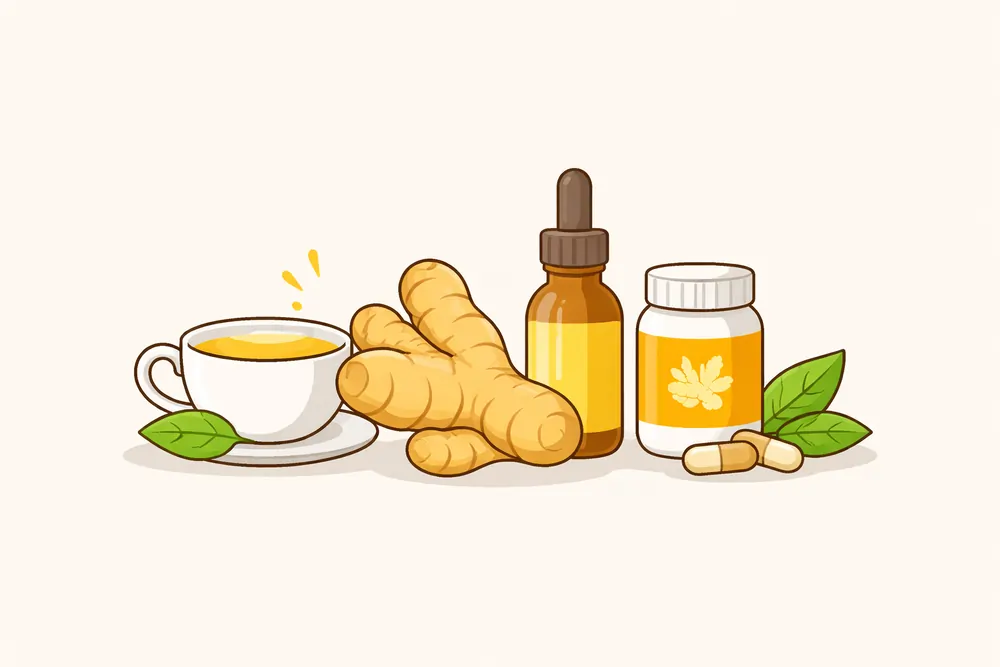
Ginger for Occasional Joint Flare Support is a common search because people want something practical, simple, and easy to use when joints feel irritated, stiff, or uncomfortable from time to time. The problem is that ginger comes in several forms, and each one works differently in daily life. This guide explains the real differences between ginger tea, capsules, and tincture, where each form makes sense, and what expectations stay realistic if you want support without overcomplicating your routine.
What is the short answer?
Ginger can fit into an occasional joint support routine, but the best form depends on your goal. Tea is the gentlest and easiest place to start. Capsules are usually the most convenient if you want consistency and a more concentrated format. Tincture is useful if you want flexible serving sizes and fast absorption in a liquid form. The key limit is simple: evidence for ginger in joint discomfort exists, but it is not strong enough to justify big promises. Ginger may support comfort for some people, but it should not replace medical care when swelling, heat, redness, or severe pain are present.
Why do people use ginger for joint support?
Ginger, or Zingiber officinale, has a long history in traditional wellness practices. It is often discussed for its naturally occurring compounds, including gingerols and shogaols. These compounds are the reason ginger is frequently mentioned in conversations about mobility, stiffness, and everyday comfort.
What matters in real life: Ginger joint flare support
Most readers are not comparing chemistry. They are comparing usability. Can you drink it daily? Can you carry it while traveling? Can you adjust the amount easily? Can you stick with it when your routine gets busy? Those questions matter more than marketing language.
What counts as an occasional joint flare?
An occasional joint flare usually means a short period of increased discomfort, stiffness, or irritation that comes and goes. It may happen after overuse, a change in activity, poor sleep, or an existing joint issue. The phrase matters because ginger belongs in the support category, not the emergency category.
When caution matters more than supplementation: Ginger joint flare support
If a joint becomes suddenly swollen, hot, sharply painful, or hard to move, that is a different situation. The same is true if symptoms keep returning, affect several joints, or come with fever or visible redness. In those cases, the priority is medical evaluation, not just adding a supplement.
How does ginger tea compare with capsules and tincture?
The three forms have different strengths. Tea is food-like and gentle. Capsules are compact and standardized. Tincture is flexible and fast to use. None of them is automatically the best option for every person.
| Form | Main Strength | Main Limitation | Best For |
|---|---|---|---|
| Ginger Tea | Gentle, soothing, easy to start | Less concentrated | Beginners and daily habit builders |
| Ginger Capsules | Convenient and more concentrated | Less flexible, harder to adjust by feel | People who want consistency |
| Ginger Tincture | Flexible liquid format | Taste and alcohol base may not suit everyone | People who want adjustable serving size |
Is ginger tea enough for occasional joint flare support?
Sometimes yes, especially if your goal is mild, general support. Ginger tea is the easiest entry point because it feels more like a normal beverage than a supplement protocol. It also helps people slow down, warm up, and build a repeatable habit.
Why tea works well for beginners: Ginger joint flare support
Tea lowers the barrier. You do not need to compare many supplement labels. You do not need a capsule schedule. You simply prepare fresh ginger or use a plain ginger tea product and make it part of the day. That simplicity is useful when you want low friction.
Where tea may fall short
Tea is usually less concentrated than capsules or extracts. That does not make it useless. It just means tea may be better for gentle support than for people looking for a stronger, more supplement-style routine.
Are ginger capsules the best option for consistency?
For many people, yes. Capsules are often the easiest way to keep ginger intake consistent from day to day. They also fit well into travel, workdays, and structured supplement routines.
Why capsules often win on convenience
A capsule takes seconds. There is no slicing, steeping, or measuring liquid drops. This matters because consistency often depends on convenience more than motivation. If you want the most practical option, capsules are hard to beat.
Where capsules may not be ideal: Ginger joint flare support
Capsules feel less flexible. You cannot adjust them as easily as a cup of tea or a small liquid serving. Some people also prefer food-based or liquid formats instead of swallowing pills.
When does a ginger tincture make more sense?
Ginger tincture makes sense when you want a liquid form but do not want to drink a full cup of tea. It can also work well for people who like to adjust the amount gradually or mix a small serving into water.
Why some people prefer tinctures
Tinctures are portable, quick, and easy to personalize. They also suit people who already use herbal extracts and want one format across several botanicals.
What to watch with tinctures: Ginger joint flare support
Some tinctures contain alcohol. That is not ideal for everyone. Taste can also be a barrier. If you dislike strong herbal liquids, a tincture may look convenient on paper but fail in practice.
Which form of ginger is strongest?
In most practical comparisons, capsules and tinctures are the more concentrated formats, while tea is the gentlest. That said, stronger does not always mean better. The best form is the one you can use consistently, tolerate well, and fit into a broader joint support plan.
| Question | Best Match |
|---|---|
| Which form is easiest for beginners? | Tea |
| Which form is easiest for daily consistency? | Capsules |
| Which form is easiest to adjust? | Tincture |
| Which form feels most like a food-based habit? | Tea |
| Which form travels best? | Capsules or tincture |
What does the evidence actually suggest?
Ginger is often discussed in relation to osteoarthritis, joint pain, and musculoskeletal discomfort. Some research suggests possible benefit, but the overall evidence remains mixed. Quality varies across studies. Product forms vary. Dosing approaches vary. That makes it hard to turn research into a simple promise for every reader.
What this means for readers: Ginger joint flare support
The realistic takeaway is modest. Ginger may support comfort for some people. It may fit well into a broader wellness routine. It should not be framed as a guaranteed answer for flares, arthritis, or persistent inflammatory problems.
What matters more than the form itself?
Choosing between tea, capsules, and tincture is useful, but the bigger picture still matters more. Joint comfort depends on sleep, body weight, movement patterns, recovery, footwear, training load, and existing health conditions. If those areas are weak, switching ginger formats will not fix the larger problem.
Supportive habits that often matter more
- Getting enough rest during flare periods
- Reducing repetitive strain or overload
- Using a movement plan that matches your joint tolerance
- Maintaining a healthy body weight when relevant
- Reviewing symptoms that keep returning or getting worse
Which form is best for different types of people?
This is where the choice becomes simple.
Choose tea if you want a gentle start: Ginger joint flare support
Tea is the best first step if you are new to herbal products, prefer food-based options, or want a calming routine that feels easy to repeat.
Choose capsules if you want the least hassle
Capsules are the best fit if your day is busy, you travel often, or you already use supplements and want clean, fast consistency.
Choose tincture if you want flexibility
Tincture is the best fit if you want to adjust serving size, avoid capsules, and keep a compact liquid option on hand.
Checklist for choosing tea, capsules, or tincture
- Pick tea if you want the gentlest format.
- Pick capsules if convenience matters most.
- Pick tincture if you want a liquid with flexible use.
- Do not expect one form to solve a severe flare by itself.
- Look at tolerance, routine, and product quality before trends.
- Get medical advice for hot, swollen, or sharply painful joints.
- Reassess if symptoms keep returning.
Are there safety points to keep in mind?
Yes. Ginger is widely used, but common does not mean risk-free for everyone. Some people may notice digestive discomfort. Ginger products may also be a concern for people using certain medications, including blood-thinning drugs, or for people with specific medical conditions. Pregnancy, gallbladder issues, planned surgery, and complex medication use are situations where extra caution makes sense.
Why the safety section matters
Many wellness articles focus only on benefits. That creates a false sense of simplicity. A better approach is to treat ginger as a supportive option that still deserves context, especially when supplements and medications may overlap.
Can you combine ginger forms?
You can, but more is not automatically better. Many people get better results from choosing one form they will actually use than from stacking tea, capsules, and tincture without a clear reason. Simplicity usually improves adherence.
What is the best practical strategy?
Start with the form that matches your behavior, not the form that sounds strongest in marketing. If you enjoy warm drinks and simple rituals, start with tea. If you want the easiest daily option, choose capsules. If you want adjustable liquid use, choose tincture. Then watch how well the routine holds up over time.
FAQ about Ginger for Occasional Joint Flare Support
It may offer supportive benefits for some people, but expectations should stay moderate and realistic.
Tea is usually the best place to start because it is gentle and easy to use.
In practical terms, capsules are usually more concentrated than tea.
Not always. Tincture is better for flexibility, while capsules are better for convenience.
No. Ginger should not replace professional care for persistent or severe joint problems.
Seek help if a joint is hot, swollen, very painful, hard to move, or if flares keep happening.
Some people do, but daily use should match tolerance, medication status, and medical context.
Glossary
- Ginger: A plant root widely used in food, tea, and herbal products.
- Zingiber officinale: The botanical name for ginger.
- Joint Flare: A short period when joint discomfort, stiffness, or irritation increases.
- Capsule: A supplement form that contains powdered ginger or ginger extract.
- Tincture: A liquid herbal extract, often made with alcohol or glycerin.
- Gingerols: Naturally occurring compounds found in fresh ginger.
- Shogaols: Compounds that become more prominent in dried or processed ginger.
- Osteoarthritis: A common joint condition linked with cartilage breakdown and stiffness.
- Musculoskeletal Discomfort: General discomfort involving joints, muscles, or related tissues.
Conclusion
In the Ginger for Occasional Joint Flare Support comparison, tea is the gentlest option, capsules are the most convenient, and tincture offers the most flexibility. The best choice is the one that fits your routine, respects safety, and stays part of a realistic plan for joint support.
Sources
- Overview of ginger use, evidence, and safety, Ginger: Usefulness and Safety — nccih.nih.gov/health/ginger
- Clinical summary of nutritional approaches for musculoskeletal pain and inflammation, Nutritional Approaches for Musculoskeletal Pain and Inflammation — nccih.nih.gov/health/providers/digest/nutritional-approaches-for-musculoskeletal-pain-and-inflammationConsumer guidance on nutritional approaches for musculoskeletal inflammation, 7 Tips: Nutritional Approaches for Musculoskeletal Inflammation — nccih.nih.gov/health/tips/tips-what-you-need-to-know-about-nutritional-approaches-for-musculoskeletal-inflammation
- General supplement terminology and consumer education, Dictionary of Dietary Supplement Terms — ods.od.nih.gov/HealthInformation/dictionary.aspx
- General medical guidance on arthritis symptoms and urgent review, Arthritis — nhs.uk/conditions/arthritis
- Guidance on inflammatory arthritis flare management, Managing a flare of inflammatory arthritis — ouh.nhs.uk/rheumatology/information/patients/advice/flare


