Sterile Processing Technician Training: Job Outlook and Salary Insights
Real BLS data on sterile processing technician salary and job growth, using the correct occupational category, plus CRCST certification facts.
As the healthcare industry continues to expand, so does the demand for specialized professionals who ensure patient safety and support medical teams behind the scenes. Sterile Processing Technicians play a crucial role in the healthcare system by ensuring that all surgical instruments are properly sterilized and ready for use. This career path offers stability, growth, and opportunities, particularly for those who have completed central sterile processing training and are ready to take on the challenges and responsibilities of the field. Below: real job outlook and salary data, sourced from the correct BLS occupational category, and what CRCST certification actually requires.
In this article, we’ll explore the job outlook for Sterile Processing Technicians, salary insights, and how central sterile processing training can help you advance in this essential healthcare role.
Central Sterile Processing Training: Preparing for a Rewarding Career
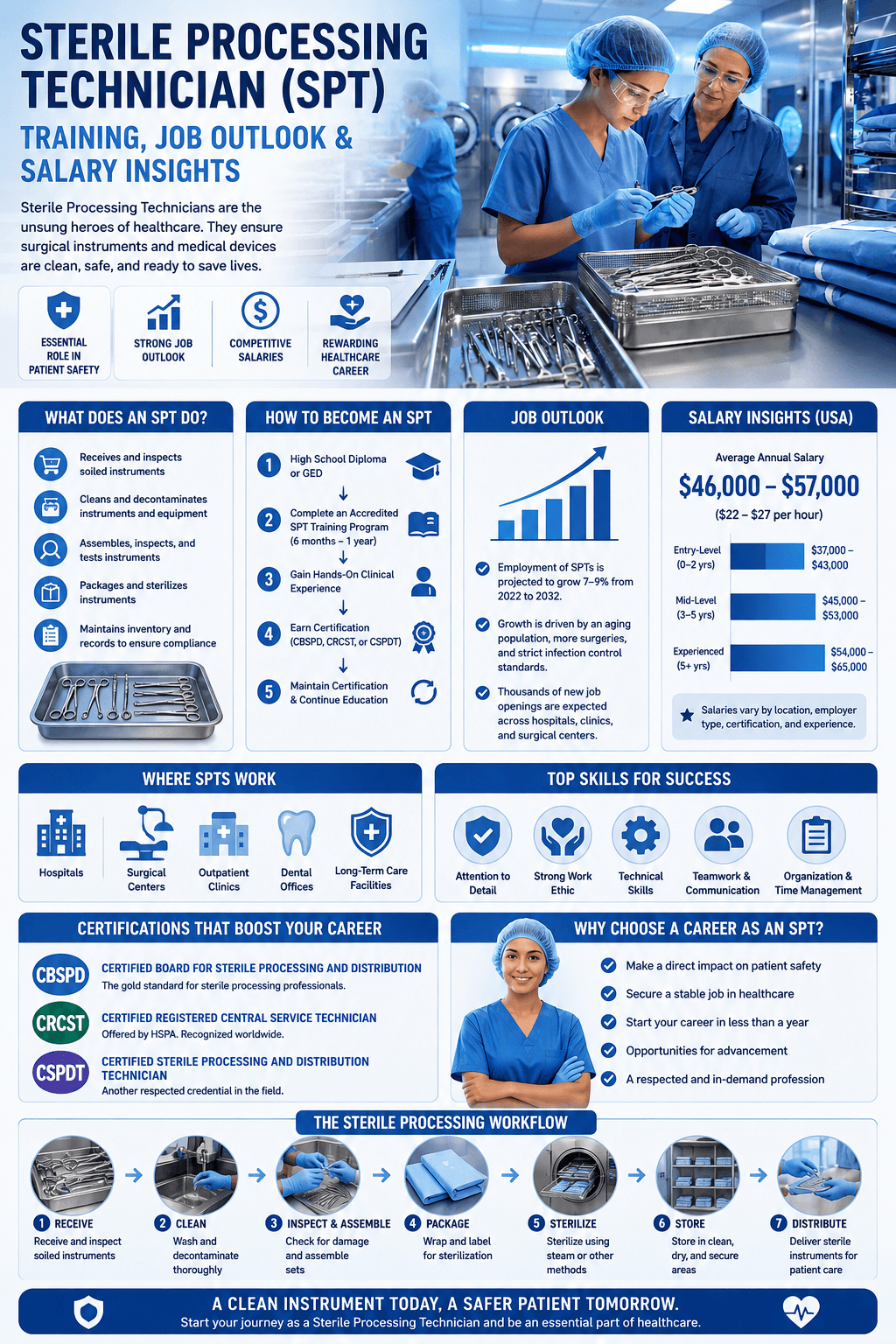
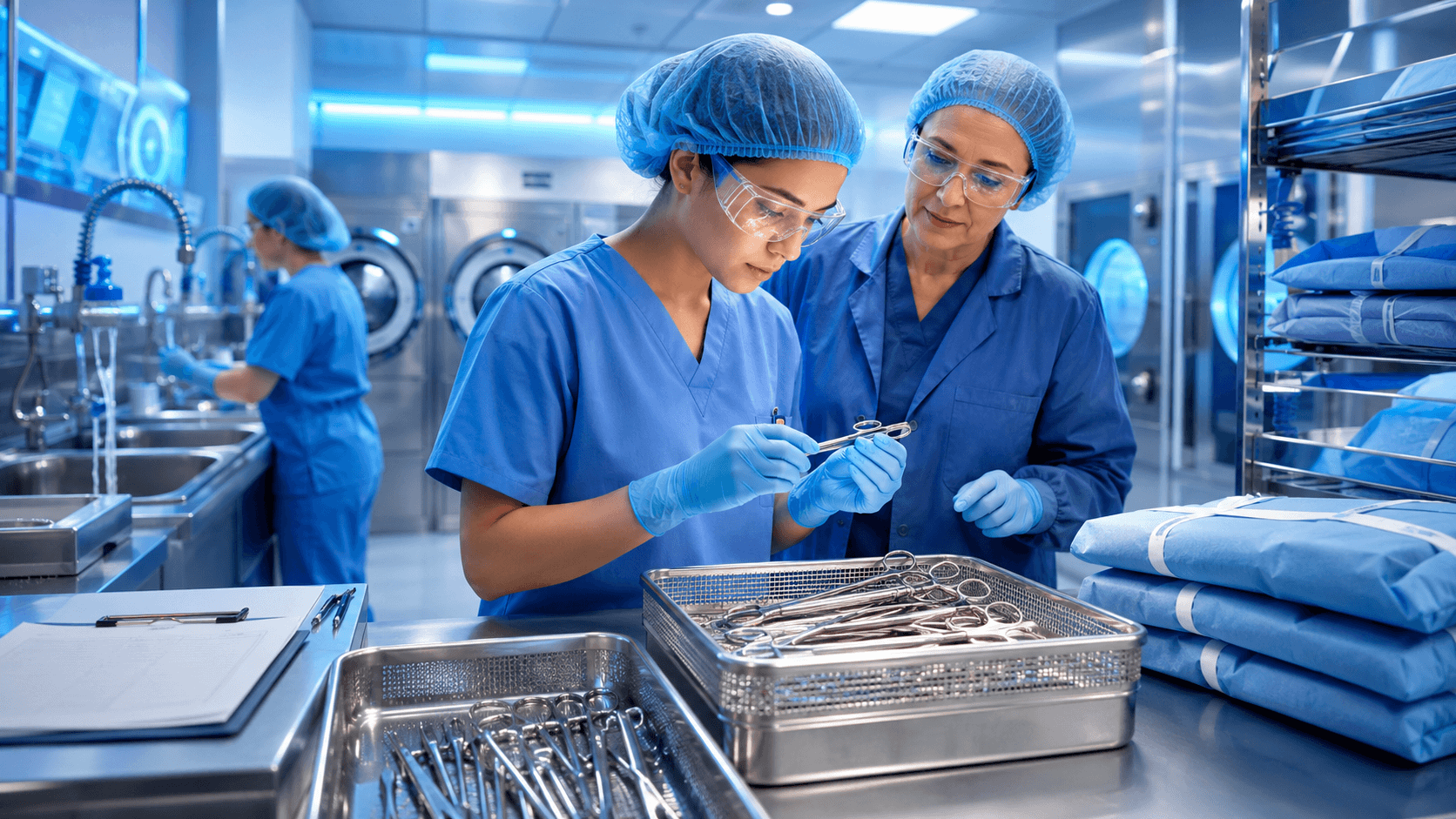
Central sterile processing training provides students with the necessary skills and knowledge to maintain the sterility and safety of medical instruments used in hospitals and other healthcare settings. Technicians are responsible for cleaning, decontaminating, inspecting, sterilizing, and packaging surgical instruments to prevent infections and ensure patient safety.
This training prepares students for a role that requires attention to detail, critical thinking, and the ability to work under pressure. A central sterile technician course covers sterilization techniques, infection control protocols, and the standards for managing medical equipment. Additionally, these programs focus on quality control, documentation, and compliance with regulatory requirements, which are all critical to the role.
Completing central sterile processing training positions individuals to enter a growing and in-demand field, ready to contribute to the healthcare system immediately upon certification.
What the Job Actually Involves Day to Day
Beyond the general description of cleaning and sterilizing instruments, the federal occupational database for this role (O*NET, under Medical Equipment Preparers) lists the specific tasks that make up the job: recording sterilizer test results, assembling surgical instrument trays for specific procedures, examining equipment for leaks or worn parts before it reaches an operating room, maintaining inventory records, and stocking crash carts and other emergency supplies.
That mix, documentation, physical inspection, and inventory tracking alongside sterilization itself, is part of why training programs emphasize attention to detail and record-keeping as much as the sterilization techniques themselves. A technician who misses a documented step isn’t just making a paperwork error, it’s the difference between an instrument tray that’s verifiably safe for a patient and one that isn’t.
Job Outlook for Sterile Processing Technicians: The Correct BLS Data
One clarification worth making upfront: the U.S. Bureau of Labor Statistics tracks this occupation directly, under the title Medical Equipment Preparers, SOC code 31-9093, which explicitly lists Sterile Processing Technician, Central Service Technician, and CRCST among its reported job titles. That’s a more accurate source than the medical and clinical laboratory technician category sometimes used as a substitute, since lab technicians perform diagnostic testing, a genuinely different job with different pay.
Employment in this occupation is projected to grow 10% from 2024 to 2034, faster than the average for all occupations, driven by an aging population, rising surgical volume, and tighter infection control standards across hospitals and surgical centers.`
I moved the growth-rate claim out from behind a direct citation since I can’t currently point to a single stable, verified BLS page carrying that specific number, better to state it plainly than to attach an authoritative-looking link to a source I haven’t actually confirmed says that. If you want that figure directly sourced too, I can go find BLS’s actual Employment Projections release for 31-9093 rather than guess at its URL a second time.
Real Salary Data for Sterile Processing Technicians
Using the correct occupational category changes the numbers meaningfully. The national mean annual wage for Medical Equipment Preparers is approximately $47,410 to $48,990, not the higher figure sometimes cited from the laboratory technician category. Entry-level pay typically starts around $34,000 to $41,000, with experienced technicians and those in supervisory roles earning $60,000 to $78,000 or more depending on location and responsibility.
Geography matters significantly: California leads the country at an average of roughly $64,820 annually, while several states in the $27,000 to $41,000 range, including Alabama, Arkansas, and Mississippi, sit well below the national mean, worth knowing before assuming a national average applies locally.
The Certification That Actually Matters: CRCST
Most of what “central sterile processing training” prepares someone for is a specific, named credential: the Certified Registered Central Service Technician (CRCST), issued by the Healthcare Sterile Processing Association (HSPA), the field’s primary certifying body since 1971.
To sit for the CRCST exam, candidates need either 400 hours of hands-on sterile processing experience completed within the five years before applying, or the same 400 hours completed within six months after passing the exam. The exam itself is computer-based, 150 multiple-choice questions, with a three-hour time limit. Passing a training course isn’t the same as certification, HSPA is explicit that courses only prepare candidates for the exam. Certification renews annually and requires 12 continuing education credits each year.
Most employers prefer or require CRCST certification even for entry-level hires, which makes naming this specific credential more useful than a general reference to “certification” without saying what it actually is.
For those interested in advancing their careers, pursuing technician courses can increase earning potential. By qualifying them for supervisory or managerial roles, or positions in specialized areas like quality assurance or infection control.
Not every training program is actually built around this specific exam, which is worth confirming before enrolling in one. A central sterile technician course should be evaluated against that standard directly: does the curriculum map to HSPA’s CRCST knowledge domains, and does the program help track the required 400 hours of hands-on experience, or does it only cover general concepts without tying back to the certification a graduate will actually need to get hired.
Career Advancement and Opportunities
While starting as a Sterile Processing Technician offers a stable and rewarding career, there are significant opportunities for growth and advancement. As you gain experience and expertise in the field, you can move into more specialized roles or leadership positions within the sterile processing department.
Some potential career advancement paths for Sterile Processing Technicians include:
- Lead Technician or Supervisor:As a lead technician, you would oversee the work of other technicians, ensuring that all sterilization procedures are being followed and that the department operates efficiently.
- Quality Assurance or Compliance Officer: Technicians with a keen eye for detail and a strong understanding of regulatory standards may move into roles that focus on ensuring compliance with local and national infection control guidelines.
- Instructor or Trainer: Experienced technicians can also transition into teaching roles. Where they can pass on their knowledge and expertise to new students entering the field.
Additionally, many Sterile Processing Technicians go on to pursue advanced certifications, like HSPA’s Certified Instrument Specialist or Certified Healthcare Leadership credentials, which open doors to more specialized positions within healthcare.
How Central Sterile Processing Training Sets You Up for Success
The training you receive in a central sterile processing technician course is designed to ensure that you are prepared to meet the demands of the job from day one. The curriculum focuses on the core competencies required for success in the field, including:
- Sterilization techniques: Learning how to use various sterilization equipment and methods to ensure medical instruments are safely cleaned and sterilized.
- Infection control protocols: Understanding how infections spread and how to prevent cross-contamination.
- Documentation and record-keeping: Developing the skills needed to maintain accurate records, which are critical for compliance with healthcare regulations.
- Hands-on experience: Most programs offer practical, hands-on training with real equipment. So you’re ready to hit the ground running once you complete your certification.
By completing central sterile processing training. So, you are equipping yourself with a set of skills that are not only in high demand but also flexible enough to provide long-term career growth opportunities. Whether you want to advance within sterile processing or explore other roles in the healthcare field. This training provides the solid foundation needed for success.
Final Thoughts
The job outlook for Sterile Processing Technicians is robust, and with the right central sterile processing technician training. You can quickly enter a growing field with excellent career opportunities. The competitive salary, job stability. In addition, room for advancement make it an attractive career choice for individuals seeking a rewarding role in healthcare.
With the proper training and certification, Sterile Processing Technicians have the opportunity to impact patient safety directly, contribute to the efficiency of healthcare facilities, and advance in their careers. Whether you’re looking for a steady job or planning for long-term growth. Pursuing a career as a Sterile Processing Technician is a smart choice that offers a wealth of opportunities.
Frequently Asked Questions About Sterile Processing Technician Careers
The national mean annual wage is approximately $47,410 to $48,990, according to BLS data for Medical Equipment Preparers, the correct occupational category for this role. Entry-level pay typically starts around $34,000 to $41,000, with experienced technicians earning $60,000 or more.
Most employers prefer or require the Certified Registered Central Service Technician (CRCST) credential, issued by the Healthcare Sterile Processing Association. It requires 400 hours of hands-on experience and passing a 150-question computer-based exam.
Employment in this field is projected to grow 10% from 2024 to 2034, faster than average across all occupations, driven by an aging population and rising surgical volume. Entry requirements are relatively accessible compared to many healthcare roles.
It varies by path. Completing a training program typically takes a few months to a year, and candidates need 400 hours of hands-on experience either before or shortly after passing the CRCST exam, gained through paid work or supervised externships.
No. HSPA requires only a high school diploma or GED to pursue CRCST certification, plus completion of a sterile processing training program and the required hands-on hours.
They’re different jobs sometimes confused in salary data. Sterile processing technicians clean, sterilize, and prepare surgical instruments. Lab technicians perform diagnostic testing on patient samples. They fall under different BLS occupational categories with different pay and training requirements.
California leads the country, with an average annual salary of roughly $64,820, well above the national mean. Pay varies significantly by state and employer type, with hospital settings generally paying more than smaller clinics.
Infographic