Dermaplaning in Fort Worth: What It Costs, Who Can Legally Perform It, and What to Ask First
Dermaplaning in Fort Worth explained: cost ranges, Texas licensing rules, aftercare, contraindications and how to vet a med spa before booking.
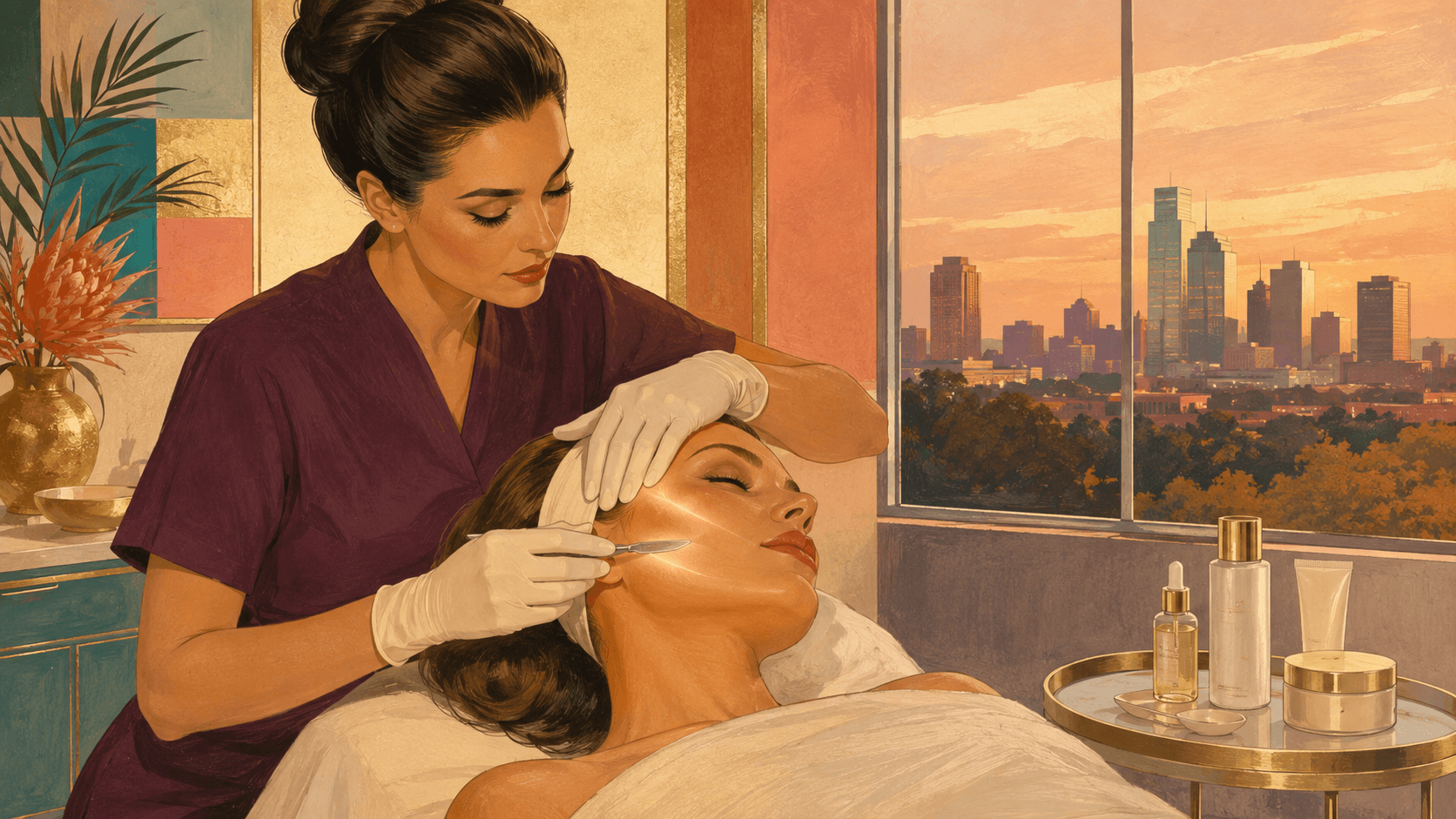
Dermaplaning is one of the fastest ways to get visibly smoother skin, and it is also one of the least understood treatments on a med spa menu. Most articles about dermaplaning in Fort Worth describe the glow and stop there. This guide covers the parts that actually affect your decision: what a session costs in the Dallas Fort Worth area, who is legally allowed to hold the blade in Texas, what happens during the appointment, whether at-home dermaplaning is a fair substitute, what to do and avoid for the 72 hours afterward, and which skin conditions make you a poor candidate.
Texas handles licensing for this treatment differently from most states. If you read nothing else here, read that section.
Key takeaways
- In Texas, dermaplaning with a razor that is not a medical scalpel requires a Class A Barber license, and dermaplaning with a medical scalpel is a Texas Medical Board matter. An esthetician license alone covers neither.
- Dallas Fort Worth booking listings checked in October 2026 priced full sessions and dermaplaning facials from $60 to $170, with add-ons to another service at $40 to $50.
- Dermaplaning removes dead surface cells and peach fuzz. It does not treat wrinkles, active acne or pigmentation.
- Skip it during an acne, cold sore, eczema, psoriasis or rosacea flare, and for about six months after isotretinoin.
- Peach fuzz does not grow back thicker or darker after dermaplaning.
Table of contents
- What Dermaplaning Actually Does
- What Happens During a Dermaplaning Appointment
- Who Can Legally Perform Dermaplaning in Texas
- How Much Dermaplaning Costs in Fort Worth
- At-Home Dermaplaning vs a Professional Session
- Who Should Not Get Dermaplaning
- Dermaplaning Aftercare: The First 72 Hours
- Dermaplaning vs Microdermabrasion vs Chemical Peels
- Med Spa or Beauty Salon: Which Setting Fits This Treatment
- How to Vet a Dermaplaning Provider in Fort Worth
- Booking Around an Event
- How to Read What You Find Online About Dermaplaning
- Price, Licensing, Pain and Pregnancy: Short Answers on Dermaplaning
What Dermaplaning Actually Does
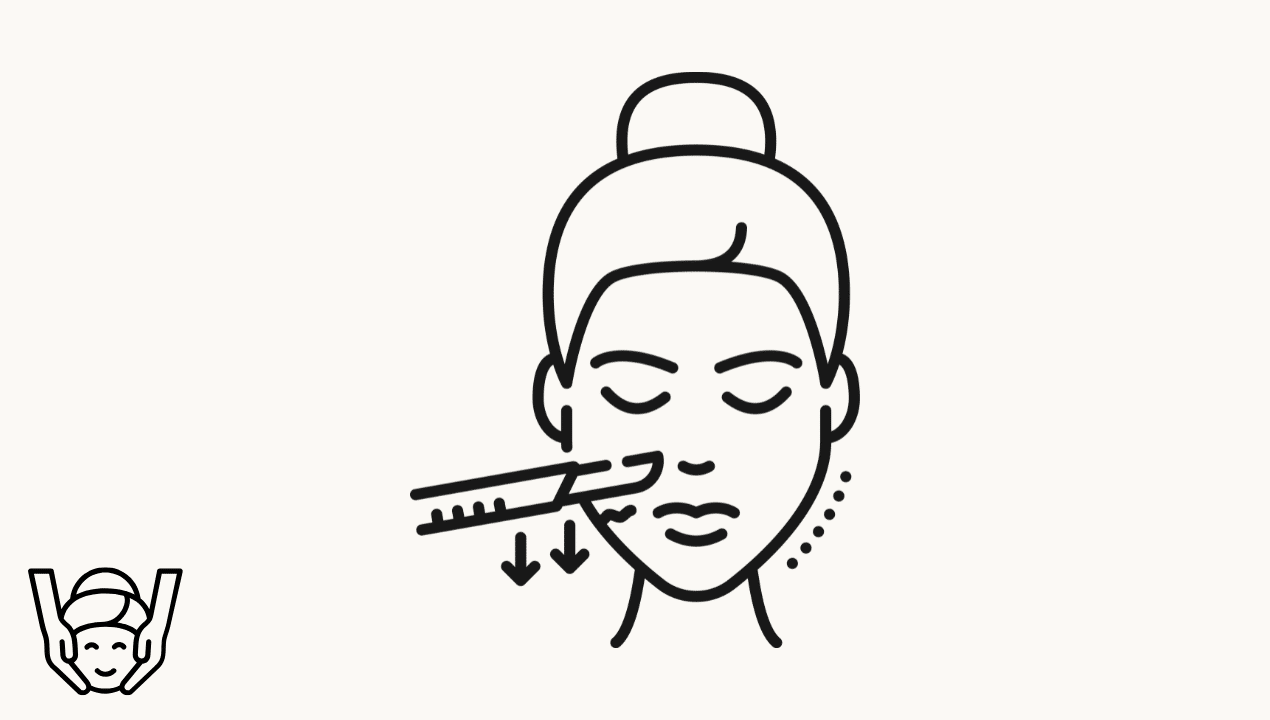
Dermaplaning is manual physical exfoliation. A practitioner holds a blade at roughly a 45 degree angle against taut skin and draws it across the surface in short feathering strokes, lifting away the outermost layer of dead corneocytes along with vellus hair, the fine colorless “peach fuzz” that covers most faces.
Two things follow from that mechanism, and both are commonly overstated in marketing copy:
What it does well. It produces an immediate, visible change in surface texture and light reflection. Makeup sits flatter because there is no fuzz to catch on and no flaking to cling to. Serums applied afterward may absorb more evenly once the layer of dead cells is gone, although research specific to dermaplaning is thin. Results are visible the same day.
What it does not do. Dermaplaning works only at the stratum corneum. It does not reach the dermis, does not stimulate collagen production, and does not treat wrinkles at a structural level. Fine lines can look softer because smoother skin scatters light more evenly, but the lines themselves are unchanged. It is not an acne treatment, and on inflamed acne it can make things worse by dragging bacteria across the face.
Being clear about that boundary is not a downside. It is how you decide whether dermaplaning or something like microneedling is the right spend.
Does Peach Fuzz Grow Back Thicker?
No. This is the single most persistent myth about the treatment. Cutting a hair does not change the follicle, and vellus hair regrows at exactly the same diameter, color and texture it had before. What changes is the tip. An uncut vellus hair tapers to a fine point, while a cut one has a blunt end, so for the first several days regrowth can feel slightly stubbly to the touch even though it is identical hair. Dermaplaning cuts hair the same way a razor does, and Mayo Clinic’s answer on whether shaved hair grows back thicker is the same: cutting does not change a hair’s thickness, color or rate of growth.
What Happens During a Dermaplaning Appointment
A professional session is short and fairly predictable, and knowing the sequence makes it easier to spot a clinic that skips a step. In Dallas Fort Worth booking listings checked in October 2026, sessions ran from about 35 minutes for a basic treatment to 90 minutes or more when dermaplaning was built into a facial.
- Intake and skin check. You fill in a form covering medications, recent treatments and skin conditions, and the practitioner looks at your skin before anything touches it. This is where the exclusions further down this page should surface.
- Cleanse and degrease. Makeup, oil and moisturizer come off completely. The blade needs a clean, dry surface to glide evenly, so damp or oily skin at this stage is a sign the prep was rushed.
- The blade pass. The practitioner holds a small section of skin taut with one hand and makes short, light strokes with the other, working across the cheeks, jawline, chin, upper lip area and forehead. Eyelids are left alone, and raised moles or lesions are worked around rather than over.
- Calm and protect. A hydrating serum and moisturizer go on, followed by broad-spectrum sunscreen. If you leave without SPF on your face, something was skipped.
Does Dermaplaning Hurt?
For most people, no. It feels like a light scraping or tickling sensation, and standard cosmetic dermaplaning does not need numbing cream. The sound of the blade is often more noticeable than the feeling. A small nick is possible, usually along the jawline or chin where the skin curves, and it should be cleaned and noted in your aftercare instructions rather than brushed off. Some redness and mild tenderness afterward is normal and usually settles within a day. Stinging that continues, or redness that lasts beyond a day or two, is worth a call back to the clinic.
Who Can Legally Perform Dermaplaning in Texas
These rules come from the state, so they apply the same way in Fort Worth, Dallas, Arlington, Austin or Houston. They are worth understanding before you book anywhere.
States disagree about where dermaplaning belongs. Some let estheticians perform it, some require physician supervision, and some treat it as a medical procedure. Texas takes an unusual route. According to the Texas Department of Licensing and Regulation’s published guide to who regulates which treatments, dermaplaning or dermablading performed with a razor that is not a medical scalpel falls under TDLR and requires a Class A Barber license. If the same treatment is performed with a medical scalpel, TDLR does not regulate it at all and directs the question to the Texas Medical Board, because using a scalpel on a patient touches the practice of medicine.
An esthetician license alone appears on neither line.
That distinction matters to you as a client for a practical reason. It tells you exactly what to ask at the front desk:
- Which tool is used, a cosmetic razor-edged dermaplaning blade or a medical scalpel?
- Which license does the person performing my treatment hold, and can I see it?
- If a scalpel is used, is there a supervising physician, and what is the delegation arrangement?
- Does the clinic itself hold a TDLR establishment license?
A well-run clinic will answer all four without hesitation. A provider who cannot tell you which category their service falls into has not thought about it, which tells you something about the rest of their protocols. Licenses are verifiable through TDLR’s public license search, and it takes about ninety seconds.
Nurses, Physicians and the Clinic Establishment License
Two more details complete the picture of who can perform dermaplaning in Texas. First, Texas law exempts people licensed to practice medicine or nursing from barbering and cosmetology licensing when they are working within the scope of their own license. In a physician-led practice, the person holding the blade may be a physician or a nurse rather than a Class A Barber. The right question then shifts from “which TDLR license do you hold” to “who delegated this treatment, and who supervises it,” which is a matter for the Texas Medical Board and the Texas Board of Nursing rather than TDLR.
Second, the building matters as well as the person. TDLR’s guidance for medical spas states that estheticians may only perform esthetic services at a TDLR-licensed establishment, and that applies even when the esthetician works inside a medical office. The same guidance draws the line on exfoliation by depth: treatments that remove only dead cells from the epidermis can sit within an esthetician’s scope, while anything that reaches the dermis must be administered or delegated by a physician. A clinic name with the word “medical” in it does not change any of this, and the establishment license is just as easy to look up as the practitioner’s.
This is not legal advice and rules can be updated, so confirm current requirements directly with TDLR or the Texas Medical Board if it matters to your decision.
How Much Dermaplaning Costs in Fort Worth
To get real numbers rather than national averages, we checked dermaplaning services listed with prices for the Dallas Fort Worth area on the Fresha booking platform on October 9, 2026. Twelve full sessions and dermaplaning facials ranged from $60 to $170, with nine of the twelve between $95 and $155 and a median of about $120. Dermaplaning added to another service cost $40 to $50. Dermatology practices and med spas that do not publish prices online may quote differently, and bundles with a peel, HydraFacial or LED therapy cost more. Treat these as a snapshot, not quotes, and ask for a written price before you book.
What should be included in that price, and what you should push back on if it is not:
| Included in a fair price | Charged separately (fair) | Red flag |
|---|---|---|
| Consultation and skin analysis | Chemical peel add-on | No consultation offered |
| Cleanse and prep | HydraFacial or microneedling combo | Blade reused or not opened in front of you |
| The dermaplaning pass itself | LED therapy | Standalone session under $50 |
| Post-treatment serum and moisturizer | Product retail | No SPF applied at the end |
| SPF application | Membership enrollment | Vague answers about licensing |
A standalone session priced under about $50 deserves questions rather than excitement. Sterile single-use blades, proper draping and a licensed practitioner’s time have a floor cost, and the corners cut to get under that number are usually the ones you would not want cut. Add-on prices in that range are normal, because the consultation and prep are already covered by the main service.
How a clinic displays its prices is a signal too. Clear service descriptions and visible pricing show up in nearly every standard playbook for medical clinic websites, so a med spa that lists its facials and injectables but hides dermaplaning behind a consultation form has made a choice. The reason may be harmless, such as bundling it into packages, but you are entitled to a number before you sit in the chair.
At-Home Dermaplaning vs a Professional Session
Inexpensive facial razors have made at-home dermaplaning a real alternative for a lot of people, and it is a fair question: if a blade is doing the job either way, why pay $100 or more? The honest answer is that the two overlap on hair removal and differ on almost everything else.
Start with the legal point, since this guide spends a lot of time on Texas licensing. Those rules govern services performed on other people for payment. Running a facial razor over your own face at home is personal grooming and needs no license. The licensing question only comes back when someone else is doing it for money.
| At-home facial razor | Professional session | |
|---|---|---|
| Main result | Removes peach fuzz with light exfoliation | Removes peach fuzz plus a more even layer of dead cells |
| Tool | Small single-edge razor, often with a safety guard | Sterile single-use blade held at a controlled angle on taut, prepped skin |
| Cost | A few dollars per blade | About $60 to $170 per session in Dallas Fort Worth listings |
| Main risks | Nicks, irritation, ingrown hairs, dull or reused blades | The same risks, with lower odds in trained and licensed hands |
| Best for | Maintenance between sessions on calm skin | First-timers, reactive or acne-prone skin, prep before a peel or an event |
If you try it at home, the basics are simple: start with clean, completely dry skin, use a new blade, keep the pressure light, use short strokes, and skip any area with an active breakout, cold sore or irritation. Never borrow a razor that has been used on the body or by someone else, and treat the aftercare section below as applying to you too, especially the sunscreen. Weekly sessions are the most common at-home mistake. Skin does not renew that fast, so frequent passes mostly add irritation.
Book a professional instead if it is your first time, if your skin reacts easily or tends to darken after irritation, if you are preparing for a peel, or if you want the exfoliation as well as the hair removal. A trained hand on properly prepped skin produces a more even result, and the intake step catches problems you might not think to check for.
Who Should Not Get Dermaplaning
Every marketing page lists the benefits. Very few list the exclusions, which is the information that actually protects you. Dermaplaning is generally considered safe for most skin types when performed properly, but the treatment is contraindicated or requires clearance from a clinician if you have:
- Active inflammatory or cystic acne. Dragging a blade across inflamed lesions can spread bacteria and worsen the breakout.
- An active cold sore or herpes simplex outbreak.
- Rosacea in an active flare, or active eczema, psoriasis, a rash or contact dermatitis on the treatment area.
- Burned skin, including skin affected by radiation therapy.
- Recent isotretinoin use. Most providers require a waiting period after finishing a course, commonly six months. Confirm the interval with your prescriber.
- Recent chemical peel, waxing, laser treatment or sunburn on the same area.
- Raised moles, skin tags or other growths in the treatment path, which should be worked around, not over.
- Very thin or fragile skin, including skin thinned by long-term topical steroid use.
- A history of keloid scarring.
Redness and mild tenderness are expected for a short time afterward. Less common risks include small nicks, breakouts, infection, scarring and changes in skin color, which is why sun protection afterward is not optional. The Cleveland Clinic maintains a plain-language overview of dermaplaning risks and candidacy that is worth reading before your consultation.
Disclose your full skincare routine at the consultation, particularly any retinoid, acid or prescription topical. Providers cannot work around what they do not know about.
Dermaplaning on Darker Skin Tones
Darker skin is not on the exclusion list, and dermaplaning involves no heat or acids, which removes two common triggers of irritation. It does call for more care in two areas. The first is post-inflammatory hyperpigmentation, the dark marks that can follow a nick or any irritation. Melanin-rich skin is more likely to develop these marks, and they tend to last longer, sometimes for months. The second is ingrown hairs, which are more common where hair grows with more curl.
In practice, that means asking the practitioner how often they treat skin like yours, mentioning any history of dark marks after breakouts, waxing or shaving, and being stricter than usual about daily sunscreen in the weeks that follow. A careful provider may suggest a lighter pass or a small test area at the first visit.
Dermaplaning Aftercare: The First 72 Hours
Freshly dermaplaned skin has had its outer protective layer removed. It is more permeable, which is the point, and also more vulnerable, which is the part people forget.
Do this:
- Apply broad-spectrum SPF 30 or higher every morning without exception, and reapply if you are outdoors. North Texas gets strong sun for much of the year, so treat daily sunscreen as part of the treatment rather than an optional extra.
- Keep the routine simple for three days: gentle cleanser, hydrating serum, moisturizer, sunscreen.
- Sleep on a clean pillowcase.
Avoid this for at least 72 hours:
- Retinoids, glycolic acid, salicylic acid and any physical scrub.
- Direct sun, tanning beds, saunas, steam rooms and hot yoga.
- Chlorinated pools.
- Waxing or threading the same area.
- Touching your face with unwashed hands.
How often to repeat: most providers recommend every four to six weeks, which tracks the skin’s natural turnover cycle. More frequent sessions do not compound the benefit and increase the chance of irritation.
Dermaplaning vs Microdermabrasion vs Chemical Peels
These three are constantly compared because they solve overlapping problems in very different ways.
| Dermaplaning | Microdermabrasion | Chemical peel | |
|---|---|---|---|
| Mechanism | Blade exfoliation | Abrasive crystals or diamond tip plus suction | Acids dissolve bonds between dead cells |
| Removes peach fuzz | Yes | No | No |
| Best for | Texture, dullness, makeup prep | Congested pores, blackheads, oily T-zone | Pigmentation, sun damage, deeper resurfacing |
| Downtime | None | Minimal | Flaking for several days depending on depth |
| Who regulates it in Texas | TDLR (Class A Barber), or TMB if a medical scalpel is used | TDLR if it removes only dead surface cells; physician-delegated if it reaches the dermis | TDLR for light, superficial peels; TMB for medium and deep peels |
The practical decision rule most providers use: if peach fuzz is the thing that bothers you, dermaplaning vs microdermabrasion resolves in favor of dermaplaning. If congested pores and blackheads are the concern, microdermabrasion’s suction gives it the edge. If you are treating pigmentation or sun damage rather than texture, neither is the right tool and you want a peel.
On dermaplaning vs chemical peel specifically, note the last row of that table. In Texas, the line for peels is depth. TDLR’s summary table sends chemical peeling questions to the Texas Medical Board, while its medical spa guidance clarifies that light, superficial peels that stay in the epidermis fall within an esthetician’s scope and medium or deep peels are medical procedures. Ask which depth of peel you are being offered before you compare prices, because they are different treatments with different risks.
The three are frequently combined in one appointment, with dermaplaning first, because the freshly exfoliated surface lets whatever follows work more effectively.
Med Spa or Beauty Salon: Which Setting Fits This Treatment

The setting matters more for dermaplaning than for most services, because the treatment involves a blade and skin.
A med spa operates on medical-grade sterility standards: single-use blades opened in front of you, documented sanitation protocols, an intake form that asks about medications and conditions, and in many cases a supervising clinician. A salon environment is built around a different service mix and may or may not carry those protocols. Whether you are comparing a med spa to a beauty salon in Fort Worth or choosing between two clinics, the questions that separate them are the same: what license does the practitioner hold, what does the intake process cover, and what happens if something goes wrong.
In practice, Fort Worth gives you four different settings, and the difference between them is not decor. It is who is standing behind the person holding the blade.
Dermatology practices. A physician-led medical office where a board-certified dermatologist is on site. Examples in the area include U.S. Dermatology Partners, which has locations on South Hulen and in the Cultural District, Fort Worth Dermatology Center on Harris Parkway, Epiphany Dermatology on 8th Avenue, and Dermatology Specialists of Fort Worth. This is the setting with the clearest answer to the scalpel question, because a physician is already part of the practice. It is usually the most expensive option and the least likely to have same-week availability for a cosmetic-only service.
Med spas attached to a medical practice. A cosmetic clinic operating under a named physician. Kalos Medical Spa at Kirby Plastic Surgery on Edwards Ranch Road and Hanami Medspa on 8th Avenue both work this way. You get a spa experience with a clinician in the building, which matters if a treatment falls on the medical side of the line.
Standalone med spas. Independent cosmetic clinics without an attached medical practice. Fort Worth has many, including Skin Glow MedSpa, It’s A Secret Med Spa on Crockett Street, A Nurses Touch Skin Care and Med Spa on Bryant Irvin Road, The Preserve Med Spa and Wellness on Bellaire Drive South, and SkinTech Spa on Southwest Boulevard. This is the largest and most varied category, which is exactly why the licensing questions matter most here. Ask who supervises, and ask what happens if you have a reaction after hours.
Solo esthetics studios. Individual practitioners working from a suite, often with the most personalized service and the most consistent practitioner, since you see the same person every visit. Skin Image Studio on West Freeway, Dezthetics Skincare Studio on South Main Street, and Skin by Salena on Birchman Avenue are examples. A solo studio can be excellent, and the licensing question is simply more direct: you are asking the one person who will treat you.
None of these categories is automatically the right answer. A solo practitioner who is properly licensed for the tool they use is a better choice than a physician-led clinic that hands you to a rushed junior. What the categories tell you is which follow-up questions to ask, and how far the answer has to travel before someone qualified can respond to a problem.
Whichever provider you choose, including any named above, check the practitioner against TDLR’s public license search rather than taking a website’s word for it. Confirm that the clinic actually offers dermaplaning before you book, since service menus change.
Editor’s note: this article names several Fort Worth providers as examples of different clinic types. Growwwth has no commercial arrangement with any of them, received no payment or consideration, and does not endorse one over another. The link to Skin Glow MedSpa is the only outbound clinic link in this article and predates this revision. None of the businesses named were contacted, and inclusion is not a recommendation. Verify licensing, current services and pricing directly with any provider before booking.
How to Vet a Dermaplaning Provider in Fort Worth
Search results are not a quality ranking. When you search “dermaplaning near me” or “med spa in Fort Worth,” the businesses in the Map Pack got there through proximity, review velocity and Google Business Profile optimization. Those are real signals, but they measure marketing execution, not clinical standards. The mechanics behind how local businesses earn Google Map Pack placement are worth understanding precisely so you stop reading position one as an endorsement.
The same caution applies to how you interpret any local “near me” search result when choosing a provider. A polished site and a top-three map position tell you a business invested in visibility. They tell you nothing about blade handling.
What to check instead, in order:
- License verification. Look up the practitioner in TDLR’s public license search, and look up the clinic’s establishment license while you are there. Confirm the credential matches the tool they use.
- Consultation before treatment. A provider who books you straight into a service without an intake form has skipped the step where contraindications surface.
- Blade handling. The blade should be sterile, single use, and opened in front of you.
- Written aftercare. Verbal instructions get forgotten. A printed or emailed protocol shows a clinic that tracks outcomes.
- Review substance, not volume. Read the three-star reviews. They are where the specifics live.
That last point deserves a second look, because review profiles are managed assets. Local businesses are routinely coached to run a deliberate review strategy across Google, Yelp and Facebook: ask happy clients at the right moment, respond to every review, and feature the best ones. None of that is dishonest, but it means a 4.9 average mostly tells you the clinic is organized about asking. The reviews worth weighting name the practitioner, describe what the intake covered, or report a reaction and explain how the clinic handled it.
Booking Around an Event
Dermaplaning is popular before weddings, photo sessions, and milestone events for an obvious reason: there is no downtime, and the result is visible immediately.
Most practitioners recommend scheduling three to five days before the event, not the day before. That window lets any transient redness settle completely while the smoothing effect is still at its peak. Do not make an event the occasion for your first-ever session. If you have a reaction, you want to discover it on an ordinary Tuesday, not the morning of.
How to Read What You Find Online About Dermaplaning
Most people research a treatment like this in about ten minutes: a search results page, an AI summary, and two clinic websites. All three share a blind spot. They reward content that is well optimized, not content that is clinically careful.
AI summaries are assembled from whatever already ranks, and beauty content ranks well for reasons that have very little to do with dermatology. The mechanics behind how content earns its way into AI-generated search answers explain why a confident paragraph about a blade-based procedure may simply be repeating marketing copy. Treat an AI answer here as a source of questions to ask, not as the answer.
Clinic websites have a tell of their own. The trust and credential signals worth checking are specific and verifiable: a named practitioner, a stated license type, an honest list of who is not a candidate, and a price you can see without filling in a form. A page that lists only benefits and no exclusions is selling rather than informing. That single filter will eliminate most of what you find.
How to Judge Dermaplaning Before and After Photos
Dermaplaning before and after photos are where most expectations get set, and many of them are not comparing like with like. The real result is subtle: smoother texture, no visible fuzz when light hits the face from the side, and skin that reflects light more evenly. It does not change pigmentation, pore size or wrinkle depth in a single visit.
So when a pair of photos shows a dramatic change in tone or lines, look for one of three explanations. The lighting or camera angle changed between shots. The “after” was taken alongside a peel or another treatment the caption does not mention. Or the image was edited. Small exposure, white balance and contrast edits, the same adjustments brands use to make stock photography look consistent, are enough to make skin look brighter and smoother without anyone touching a blade.
A trustworthy set uses the same light, distance and angle, shows bare skin with no makeup, says whether anything else was done in the same visit, and ideally includes a side-lit shot, which is where the change in fuzz and texture is actually visible.
For anything involving a blade, a medication interaction or an existing skin condition, confirm with a licensed provider rather than a search result.
Price, Licensing, Pain and Pregnancy: Short Answers on Dermaplaning
Dallas Fort Worth listings on the Fresha booking platform checked in October 2026 showed full dermaplaning sessions and dermaplaning facials from $60 to $170, with most between $95 and $155, and dermaplaning added to another service at $40 to $50. Bundles with a peel, HydraFacial or LED therapy cost more. Confirm current pricing directly with the provider.
TDLR lists dermaplaning with a razor that is not a medical scalpel as requiring a Class A Barber license. Dermaplaning with a medical scalpel falls under the Texas Medical Board. Physicians and nurses working within their own license are exempt from barber licensing, and an esthetician license alone covers neither route. Ask any Fort Worth provider which tool they use and which license the practitioner holds.
Not for most people. It feels like a light scraping or tickling sensation, and standard cosmetic dermaplaning does not need numbing cream. Some redness and mild tenderness afterward is normal. A small nick is possible, most often along the jawline or chin. Stinging or redness that lasts more than a day or two is worth reporting to the clinic.
No. Cutting a hair does not change its thickness, color or growth rate, which Mayo Clinic also confirms for shaving. Regrowth can feel slightly stubbly for a few days because the cut end is blunt rather than tapered, but nothing about the follicle changes.
Most people should dermaplane every four to six weeks, matching the skin’s natural turnover cycle. More frequent sessions increase irritation risk without improving results.
Avoid retinoids, acids, physical scrubs, direct sun, saunas, steam rooms, chlorinated pools and waxing the same area for at least 72 hours. Apply SPF 30 or higher daily without exception.
It can be, for removing peach fuzz on calm skin. Use clean, completely dry skin, a new blade, light pressure and short strokes, skip any active breakout or cold sore, and wear sunscreen afterward. A professional session gives more even exfoliation and is the better choice for first-timers, reactive or acne-prone skin, and anyone who tends to get dark marks after irritation.
It is worth it if your concern is surface texture, dullness or peach fuzz interfering with makeup. It is not worth it if you are trying to treat wrinkles structurally, clear active acne or address pigmentation, since it does not reach the layers where those problems live.
Roughly three to four weeks. The smoothing effect fades as the skin completes its natural regeneration cycle, which is why the maintenance interval and the results window line up.
Many providers offer it during pregnancy because it uses no acids, medications or heat, but there is little formal research on it, and pregnancy can make skin more reactive. Confirm with your obstetric provider first and tell the practitioner at intake.
Sources and further reading
- Texas Department of Licensing and Regulation, Who Regulates What, for the licensing categories described in this guide.
- Texas Department of Licensing and Regulation, Medical Spas, for establishment licensing and the depth rules for microdermabrasion and peels.
- Texas Occupations Code Section 1603.0013, as summarized in TDLR’s scope of practice guides, for the licensing exemption covering physicians and nurses.
- Cleveland Clinic, Dermaplaning: benefits, procedure and side effects, for candidacy and side effect information.
- Mayo Clinic, Does shaving unwanted body hair make it grow back thicker and darker?, for hair regrowth.
- Fresha booking listings for the Dallas Fort Worth area, checked October 9, 2026, for the price and session length snapshot. Prices change, so treat them as a guide rather than quotes.
- This article is general information, not medical or legal advice. Confirm treatment suitability with a licensed clinician, and confirm current licensing requirements directly with TDLR or the Texas Medical Board, since rules change.
Last reviewed: October 9, 2026
