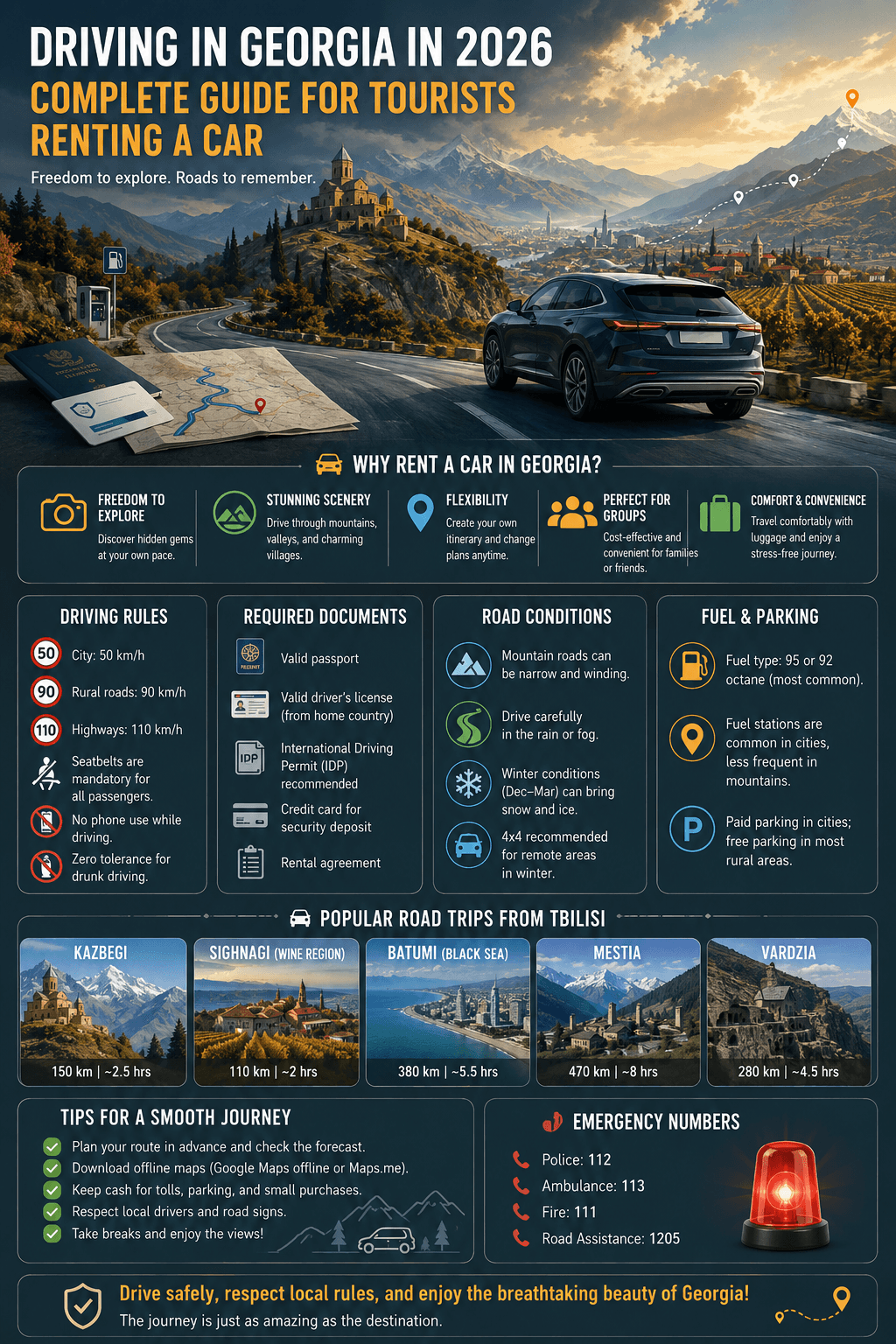
Driving in Georgia: Complete Guide for Tourists Renting a Car
Georgia’s 2026 tourist insurance rule, real driving tips and honest advice on renting a car and self-driving from Tbilisi to the mountains.
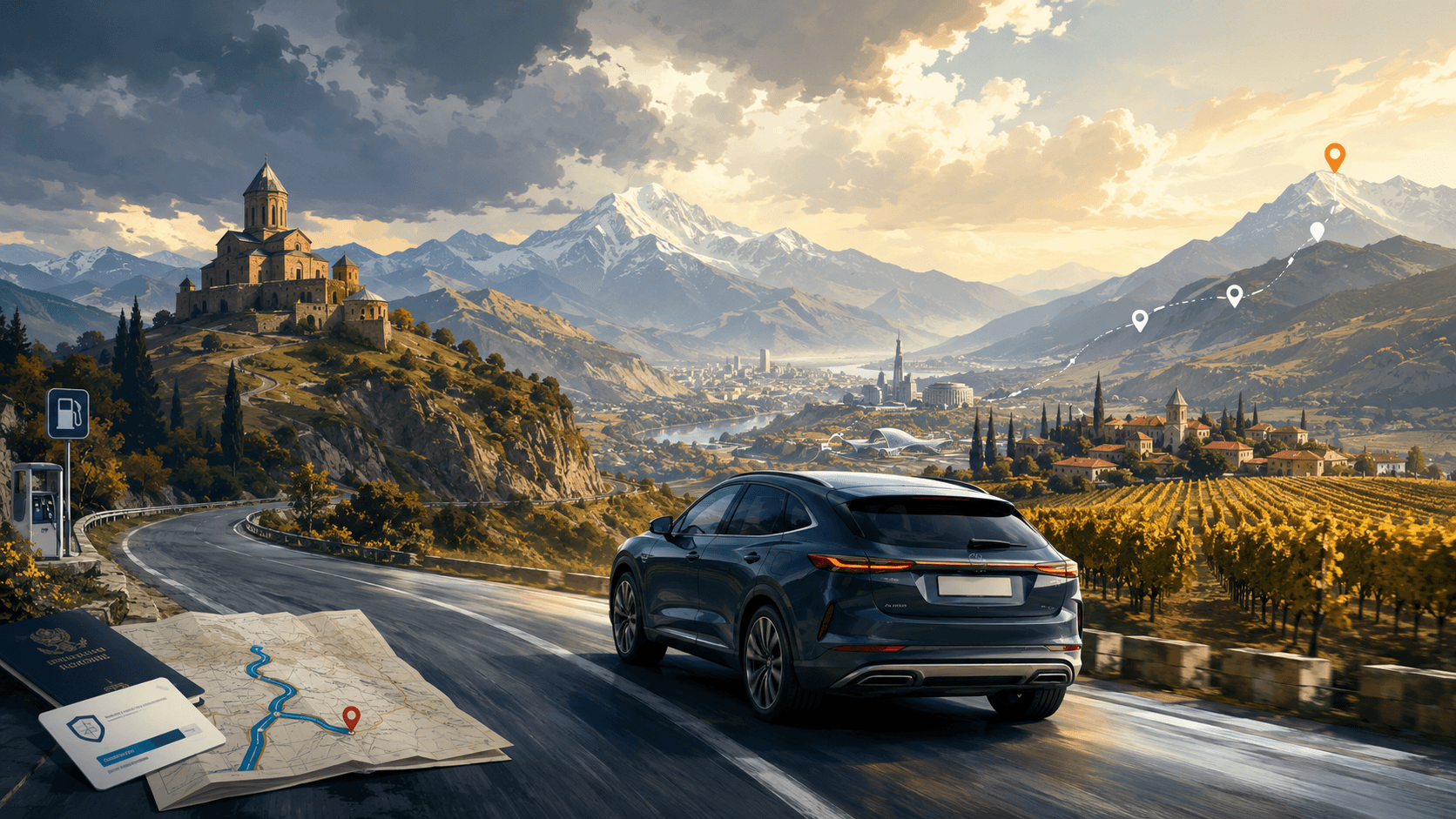
Georgia is one of those countries where renting a car can completely change the quality of a trip. Tbilisi is fascinating on its own, but many of the places that make Georgia memorable are outside the capital: mountain roads, old monasteries, wine villages, dramatic viewpoints, roadside bakeries and small towns that are difficult to enjoy properly on a fixed group tour.
Driving in Georgia is not difficult in the way many tourists fear, but it is different from driving in Western Europe. Traffic can feel more direct, local drivers often make quick decisions, and road conditions change noticeably between the main highways, rural villages and mountain regions. The country is perfectly possible to explore by car, but it rewards travellers who prepare well and avoid overloading their itinerary.
This guide explains what tourists should know before renting a car in Georgia in 2026, including driving licence requirements, traffic rules, road conditions, parking, fuel, insurance, mountain routes and practical self-drive ideas from Tbilisi.
Can Tourists Drive in Georgia?
Yes, tourists can drive in Georgia with a valid driving licence. In most cases, a foreign driving licence is accepted, especially if it is written in Latin characters. If your licence uses another alphabet, it is wise to carry an International Driving Permit or an official translation. Rental companies may also have their own document requirements, so always check the conditions before booking.
When driving, keep your passport, driving licence, rental agreement and insurance documents with you. Digital copies are useful as a backup, but they should not replace the original documents.
Most rental companies also set their own rules for minimum age, driving experience, deposits and car categories. Some may accept younger drivers with an additional fee, while others may restrict larger or more powerful vehicles. Do not assume that every company follows the same policy.
Why Renting a Car in Georgia Makes Sense
Public transport works between many large towns, and private tours are easy to find in Tbilisi. Still, a rental car gives you something more valuable: control over your time. You can leave before the crowds, stop when the weather improves, stay longer in a village you like, or change your route if a mountain road looks too tiring.
A car is especially useful if you plan to visit Kakheti, Kazbegi, Borjomi, Kutaisi, Martvili Canyon, Prometheus Cave or the Black Sea coast. These places are possible without a car, but the journey often becomes slower and less flexible.
For families, photographers, wine travellers and anyone carrying luggage, renting a car is often the most comfortable option. It also helps avoid the common problem of spending more time arranging transfers than actually enjoying the country.
What Driving in Georgia Feels Like
The first thing many visitors notice is the driving style. Georgian drivers are usually confident and sometimes impatient. Lane changes can be quick, horns are used often, and overtaking may happen more freely than tourists expect. This does not mean you need to drive the same way.
The safest approach is to stay calm, keep distance, let faster drivers pass and avoid unnecessary overtaking. On unfamiliar roads, especially outside Tbilisi, it is better to arrive 30 minutes later than to copy local drivers who know every bend.
After the first day, most tourists adapt. The key is not to treat Georgia like Germany, Switzerland or the Netherlands. It has its own rhythm, and defensive driving works much better than nervous driving.
Driving in Tbilisi
Tbilisi is the most challenging place to drive in Georgia. The city has heavy traffic during rush hours, narrow streets in older districts and limited parking in central areas such as Old Tbilisi, Sololaki, Vera, Rustaveli Avenue and Liberty Square.
If your first days are focused on sightseeing in the capital, consider collecting your rental car later. Tbilisi is easy to explore by walking, taxi and public transport. Renting a car only when you are ready to leave the city can save money, parking stress and unnecessary driving in busy traffic.
If you do need a car from the first day, choose accommodation with private parking. This small detail can make a big difference, especially if you stay in the historic centre.
Road Conditions in Georgia
Road conditions vary a lot. Main roads between major cities are usually comfortable for normal cars, while smaller rural roads may include potholes, gravel, animals, construction areas or sharp bends. In mountain regions, the same distance can take much longer than expected.
Navigation apps are useful, but travel times can be optimistic. A route that looks like three hours on the map may take four or five once you add traffic, photo stops, slow trucks, roadworks or weather changes.
For standard routes such as Tbilisi to Mtskheta, Kakheti, Borjomi, Kutaisi or Batumi, a regular car is usually enough in good weather. For remote mountain areas, winter trips or rough rural roads, a car with higher clearance is more comfortable.
Basic Road Rules Tourists Should Know
Georgia drives on the right side of the road. Seat belts are required, mobile phone use while holding the phone is not allowed, and police checks or speed cameras are common on main roads.
Speed limits are normally shown by road signs and should always be followed. General limits often differ between urban areas, roads outside settlements and highways, but signs on the road are more important than any general rule you read before travelling.
Georgia also has strict rules for alcohol and driving. If you plan to visit wineries in Kakheti or enjoy Georgian wine with dinner, do not drive afterwards. Use a taxi, hire a driver or keep the wine tasting for a day when you are not behind the wheel.
Do You Need an SUV in Georgia?
Not always. This is one of the biggest misunderstandings about renting a car in Georgia. Many tourists book an SUV because they think every road is difficult, but for most classic routes a compact or mid-size car can be enough.
A regular car usually works well for Tbilisi, Mtskheta, Sighnaghi, Telavi, Borjomi, Kutaisi and Batumi in normal weather. An SUV is more useful for winter travel, higher mountain areas, rougher village roads or trips where extra ground clearance makes the drive more comfortable.
Instead of choosing the cheapest car, choose the car that matches your route. If you are travelling with several passengers, large suitcases or planning long days on the road, comfort matters.
Mountain Roads: What to Expect
Georgia’s mountain roads are a major reason to rent a car, but they require realistic planning. Routes to Kazbegi, Gudauri, Svaneti, Racha and other mountain regions can be incredibly scenic, but they may also include trucks, sharp turns, changing weather and slower traffic.
The Georgian Military Highway from Tbilisi to Kazbegi is one of the most popular self-drive routes in the country. It is paved and widely used, but it still deserves respect. Weather can change quickly, especially near Gudauri and the Cross Pass. In winter, delays or temporary restrictions are possible.
More remote regions are different. Some roads may not be suitable for standard rental cars, and certain rental agreements may prohibit driving on unpaved or high-risk routes. Always check the rental conditions before planning remote mountain travel.
Winter Driving in Georgia
Winter driving depends heavily on the region. Tbilisi may have mild conditions, while Gudauri, Bakuriani and higher mountain roads can face snow, ice and poor visibility.
If you plan to drive in winter, ask whether the car has winter tyres and whether snow chains are available or required for your route. Do not leave this question until pickup day. If mountain weather looks bad, change your plan rather than forcing the drive.
For tourists who are not used to snow or mountain roads, hiring a local driver for difficult winter routes can be a better decision than taking unnecessary risks.
Fuel, Parking and Navigation
Fuel stations are easy to find in Tbilisi and along main routes. In remote regions, fill up before leaving larger towns. It is a simple habit that prevents stress later.
Google Maps works well in most areas, but offline maps are useful in mountain valleys where mobile signal can become weaker. A local SIM card or eSIM is inexpensive and makes navigation much easier.
Parking is the biggest issue in central Tbilisi. Outside the capital, it is usually easier near guesthouses, wineries, viewpoints and tourist attractions. Do not leave valuables visible in the car, especially cameras, bags, passports or laptops.
Georgia’s Mandatory Tourist Insurance Requirement for 2026
Something changed for every visitor entering Georgia this year, not just drivers. Since January 1, 2026, Georgia requires all foreign tourists, regardless of nationality or length of stay, to carry valid health and accident insurance for the full duration of their visit. This is separate from anything a car rental company sells you. It’s a condition of entry, confirmed by the Georgian National Tourism Administration, and immigration officers or your airline may ask to see proof of it before you’re allowed in.
The policy needs to be presented in physical or digital form, written in Georgian or English, and can be issued by a Georgian or foreign insurer. Most travel insurance already sold for international trips meets this bar, but check the coverage amount and language before you fly rather than at the airport counter.
This matters for anyone planning a Georgia road trip, because it changes what “being covered” actually means. A rental company’s collision damage waiver protects the car. Your mandatory entry insurance is meant to protect you, covering emergency medical costs and accidents. Neither replaces the other, and conflating the two is the most common mistake people renting a car in Georgia make once they start researching insurance and only find information about rental deposits.
If you already have annual travel insurance that covers Georgia and meets the minimum requirements, you likely don’t need to buy anything extra. If you don’t, sort it out before departure. Getting turned back at the border over a missing document is a worse start to a trip than any pothole on the Georgian Military Highway.
Insurance and Deposits
Before booking, read the insurance conditions carefully. The cheapest car is not always the best option if the deposit is high or important damage types are excluded.
Check whether the insurance covers tyres, glass, underbody damage, gravel roads, mountain routes and accident assistance. Also check how much deposit is blocked, what payment method is required and what happens if the car is damaged outside normal road conditions.
If you want to compare local offers before your trip, Car Rental Tbilisi No Deposit can be a practical place to check rental cars in Tbilisi and choose an option that fits your route, budget and driving experience.
Best Road Trips from Tbilisi
Tbilisi to Kazbegi
This is the classic Georgian road trip. The route can include Mtskheta, Zhinvali Reservoir, Ananuri Fortress, Gudauri and the viewpoint near the Cross Pass before reaching Stepantsminda. It is scenic, popular and very rewarding, but weather and traffic should be taken seriously.
Tbilisi to Kakheti
Kakheti is one of the easiest and most enjoyable regions to explore by car. Sighnaghi, Telavi, Tsinandali and local wineries are much easier to visit with your own vehicle. If wine tasting is part of the plan, arrange a non-driving day or use a local driver.
Tbilisi to Borjomi
Borjomi is a good choice for travellers who want forests, mineral water parks and a calmer atmosphere. It is also easier than many high mountain routes, making it suitable for a first road trip outside Tbilisi.
Tbilisi to Kutaisi
Kutaisi works well as part of a longer route toward western Georgia. Nearby attractions such as Prometheus Cave, Martvili Canyon and old monasteries are much easier to combine with a rental car.
If Georgia is one leg of a longer trip, the fundamentals carry over more than you’d expect. Driving in Tenerife: Road Rules, Parking Tips and Local Advice for Visitors covers a similarly mountainous, tourist-heavy destination where the same defensive-driving mindset applies.
And if you’re mapping out a wider self-drive itinerary across Europe, Best Places to Visit from Split by Car in 2026 walks through a comparable coastal-to-mountain route-planning approach in Croatia.
Common Mistakes Tourists Make
The most common mistake is planning too much driving in one day. Georgia looks compact on the map, but mountain roads, village sections and sightseeing stops slow everything down.
Another mistake is choosing the cheapest car without thinking about luggage, comfort or road type. A very small car may be fine for Tbilisi and Kakheti, but less pleasant for long mountain drives.
Tourists also often ignore insurance details, collect a car too early in Tbilisi, drive unfamiliar roads after dark or forget to check the weather before mountain routes.
Frequently Asked Questions
Yes, many tourists drive in Georgia safely, but it requires attention and defensive driving. Tbilisi traffic and mountain roads are the main challenges.
It depends on your licence and rental company. If your licence is not in Latin characters, an International Driving Permit or official translation is strongly recommended.
In good weather, many travellers do this route in a standard car. In winter or bad weather, a more suitable vehicle and flexible timing are important.
If you plan to leave Tbilisi immediately, airport pickup can be convenient. If you will spend a few days in the city first, renting later may be easier.
Georgia does not currently have a major toll road system for ordinary tourist car routes, which makes planning simpler.
Yes. Since January 1, 2026, all foreign tourists must carry valid health and accident insurance for their full stay, separate from any rental car insurance. This is checked at entry, not just recommended for the road.
Only with advance approval from the rental company, usually a notarized authorization letter, and it isn’t something you can arrange last minute. Confirm this with your rental company weeks before you plan to cross a border, not at pickup.
Call 112 immediately. Don’t move the vehicle until police have documented the scene if another party is involved, and contact your rental company as soon as it’s safe to do so.
Driving in Georgia gives tourists a level of freedom that is hard to match with tours or public transport. It lets you stop at viewpoints, visit small wineries, reach mountain villages and build a route that fits your pace rather than someone else’s schedule.
The best experience comes from planning realistically. Choose the right car, check the documents, understand the insurance, avoid rushing and respect the road conditions. Georgia is not a country to drive through quickly. It is a country where the road itself often becomes one of the best parts of the trip.
Infographic